


New 12 Mar 2026
Why Fast Loading Speed Matters in Ecommerce Development

Writen by Admin
Introduction
Speed is one of the most critical factors in ecommerce success. Modern consumers expect websites to load almost instantly, and even small delays can lead to lost sales.
Research shows that slow-loading websites increase bounce rates and reduce customer satisfaction. For ecommerce stores, this can directly impact revenue and brand reputation.
A professional ecommerce development agency focuses heavily on performance optimization to ensure that ecommerce websites load quickly and perform smoothly across all devices.
The Impact of Website Speed on Sales
Customers have very little patience when shopping online. If a website takes too long to load, they will simply move to another store.
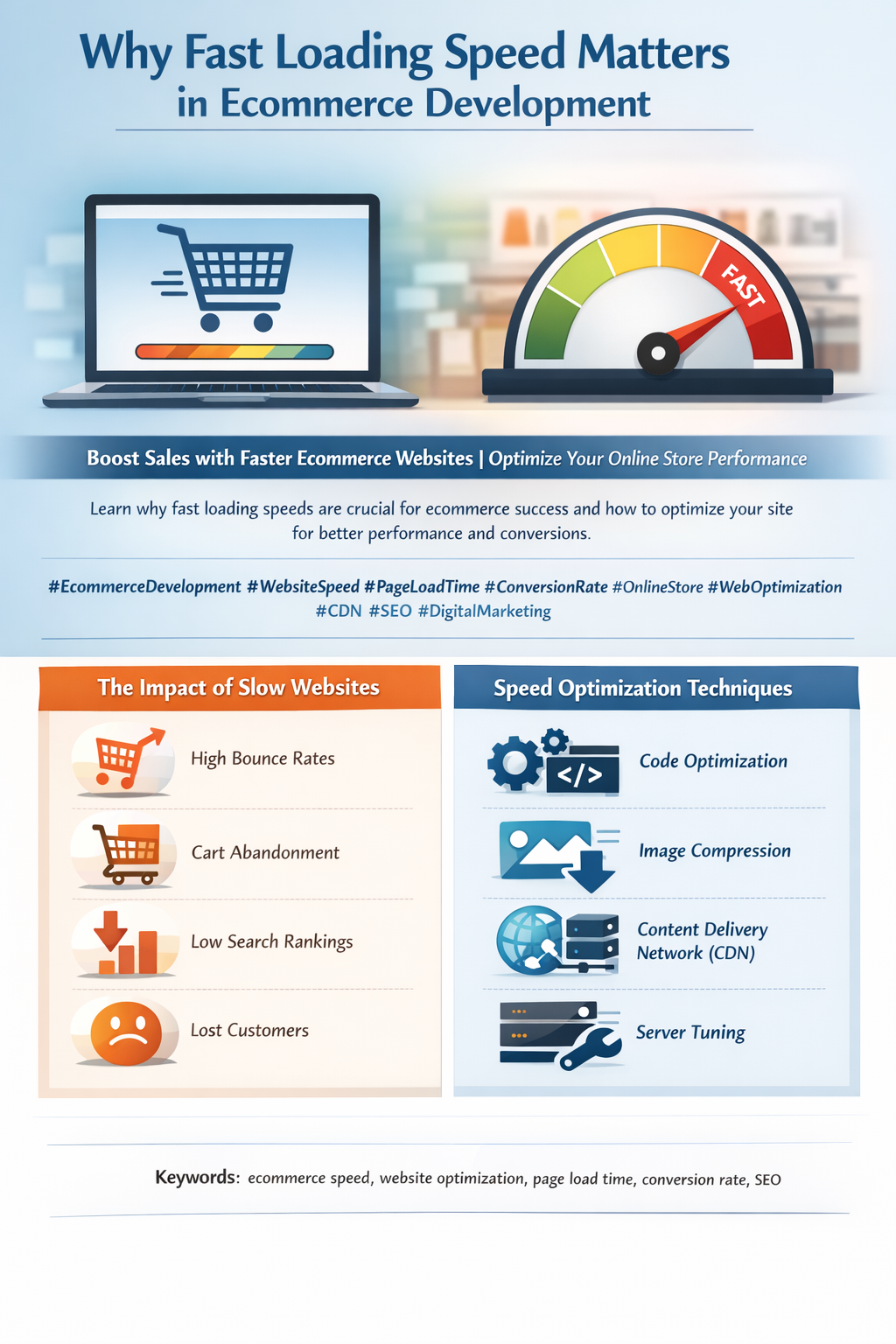
Slow websites can lead to:
-
Higher bounce rates
-
Increased cart abandonment
-
Lower search engine rankings
-
Decreased customer trust
Improving website speed can significantly boost conversions and enhance the overall shopping experience.
How Ecommerce Development Agencies Optimize Speed
Experienced developers use several techniques to improve ecommerce website performance.
Code Optimization
Clean and efficient coding reduces unnecessary scripts and improves loading times.
Image Compression
High-resolution images are essential for product presentation, but they must be optimized to prevent slow loading speeds.
Content Delivery Networks (CDN)
CDNs distribute website content across multiple servers around the world, allowing users to access websites faster regardless of location.
Server Optimization
Reliable hosting and optimized server configurations ensure that websites handle high traffic volumes without performance issues.
An experienced ecommerce development agency implements these techniques to create fast and reliable ecommerce platforms.
SEO Benefits of Faster Websites
Search engines prioritize websites that deliver excellent user experiences, and speed is an important ranking factor.
Fast ecommerce websites benefit from:
-
Improved search engine visibility
-
Better mobile performance
-
Higher engagement rates
-
Increased organic traffic
This makes performance optimization an essential part of ecommerce SEO strategies.
Monitoring and Continuous Performance Improvement
Website speed optimization does not stop after launch. Ecommerce websites must be continuously monitored and improved to maintain optimal performance.
Agencies typically track metrics such as:
-
Page load time
-
Server response time
-
User behavior analytics
-
Conversion rates
These insights help identify areas for improvement and ensure that the website continues to perform at its best.
Conclusion
Website speed plays a major role in ecommerce success. Slow-loading websites frustrate users, reduce conversions, and negatively impact search engine rankings.
By partnering with an experienced ecommerce development agency, businesses can ensure their ecommerce platforms are optimized for speed, performance, and customer satisfaction.