


New 03 May 2026
Top Technologies Used in Ecommerce Web Development Services

Writen by Admin
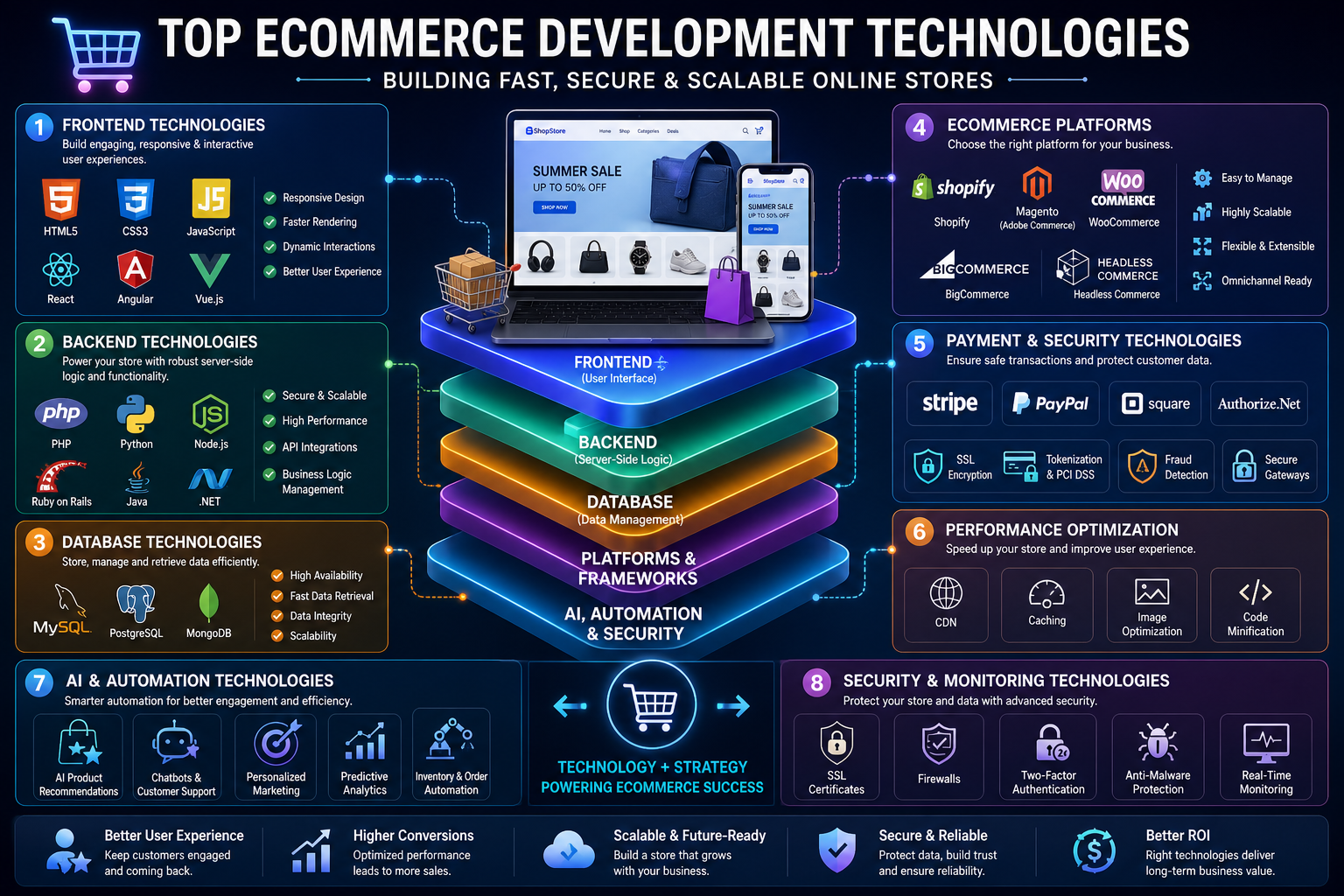
The success of an ecommerce website depends heavily on the technologies used to build it. From seamless user experiences to fast performance and secure transactions, the right tech stack plays a crucial role in determining how well your online store performs.
Professional ecommerce web development services leverage modern technologies to create scalable, high-performing, and feature-rich ecommerce platforms. In this blog, we’ll explore the top technologies used in ecommerce development and how they contribute to building successful online stores.
H2: Frontend Technologies for User Experience
The frontend is what users see and interact with on your ecommerce website. A smooth and engaging interface is essential for keeping visitors interested and encouraging them to make purchases.
H3: HTML5, CSS3, and JavaScript
These are the foundational technologies of web development:
- HTML5 structures the content of your website
- CSS3 controls the design, layout, and responsiveness
- JavaScript adds interactivity and dynamic features
Together, they create visually appealing and functional user interfaces.
H3: Modern JavaScript Frameworks
Frameworks like React, Angular, and Vue.js are widely used in ecommerce development.
They offer:
- Faster page rendering
- Component-based architecture
- Improved performance
- Enhanced user experience
Ecommerce web development services often use these frameworks to build highly interactive and responsive websites.
H2: Backend Technologies for Functionality
The backend handles the logic, database interactions, and server-side operations of your ecommerce website.
H3: Popular Backend Languages
Common backend technologies include:
- PHP: Widely used for platforms like WooCommerce and Magento
- Python: Known for scalability and clean code (used with Django)
- Node.js: Ideal for real-time applications and high performance
- Ruby on Rails: Focused on rapid development and simplicity
Each language has its strengths, and the choice depends on your project requirements.
H3: Database Management Systems
Databases store all your ecommerce data, including products, customers, and orders.
Popular options include:
- MySQL
- PostgreSQL
- MongoDB
Efficient database management ensures fast data retrieval and smooth website performance.
H2: Ecommerce Platforms and Frameworks
Many businesses rely on established ecommerce platforms to build and manage their online stores.
H3: Popular Ecommerce Platforms
Professional ecommerce web development services often work with:
- Shopify: User-friendly and ideal for small to medium businesses
- Magento (Adobe Commerce): Highly customizable and scalable
- WooCommerce: Flexible and built on WordPress
- BigCommerce: Robust and feature-rich platform
Each platform offers unique features and capabilities, making it important to choose the right one for your business.
H3: Headless Commerce Solutions
Headless commerce separates the frontend from the backend, allowing greater flexibility.
Benefits include:
- Faster performance
- Custom user experiences
- Easy integration with multiple channels
This approach is becoming increasingly popular in modern ecommerce development.
H2: Payment Gateway Integration Technologies
Secure and efficient payment processing is essential for any ecommerce website.
H3: Popular Payment Gateways
Ecommerce websites commonly integrate with:
- Stripe
- PayPal
- Square
- Authorize.Net
These gateways enable smooth and secure transactions for customers worldwide.
H3: Security Protocols
To protect customer data, developers implement:
- SSL encryption
- Tokenization
- PCI DSS compliance
Ecommerce web development services ensure that all payment processes meet strict security standards.
H2: Performance Optimization Technologies
Website speed and performance directly impact user experience and conversions.
H3: Content Delivery Networks (CDNs)
CDNs distribute your website content across multiple servers, reducing load times and improving performance for users in different locations.
H3: Caching and Optimization Tools
Technologies used for performance optimization include:
- Browser caching
- Server-side caching
- Image optimization tools
- Code minification
These tools help ensure your website loads quickly and efficiently.
H2: AI and Automation Technologies
Artificial intelligence is transforming ecommerce by enabling smarter and more personalized experiences.
H3: AI-Powered Features
Modern ecommerce websites use AI for:
- Product recommendations
- Chatbots and customer support
- Personalized marketing campaigns
- Predictive analytics
H3: Automation Tools
Automation helps streamline business operations, including:
- Inventory management
- Order processing
- Email marketing
Ecommerce web development services integrate these technologies to improve efficiency and customer satisfaction.
H2: Security Technologies in Ecommerce Development
Security is a top priority in ecommerce, as websites handle sensitive customer data.
H3: Essential Security Features
Key security technologies include:
- SSL certificates
- Firewalls
- Two-factor authentication
- Anti-malware tools
H3: Regular Updates and Monitoring
Ongoing security measures involve:
- Software updates
- Vulnerability scanning
- Real-time monitoring
These practices help protect your website from cyber threats and maintain customer trust.