


New 03 May 2026
The Role of SEO in Ecommerce Web Development Services

Writen by Admin
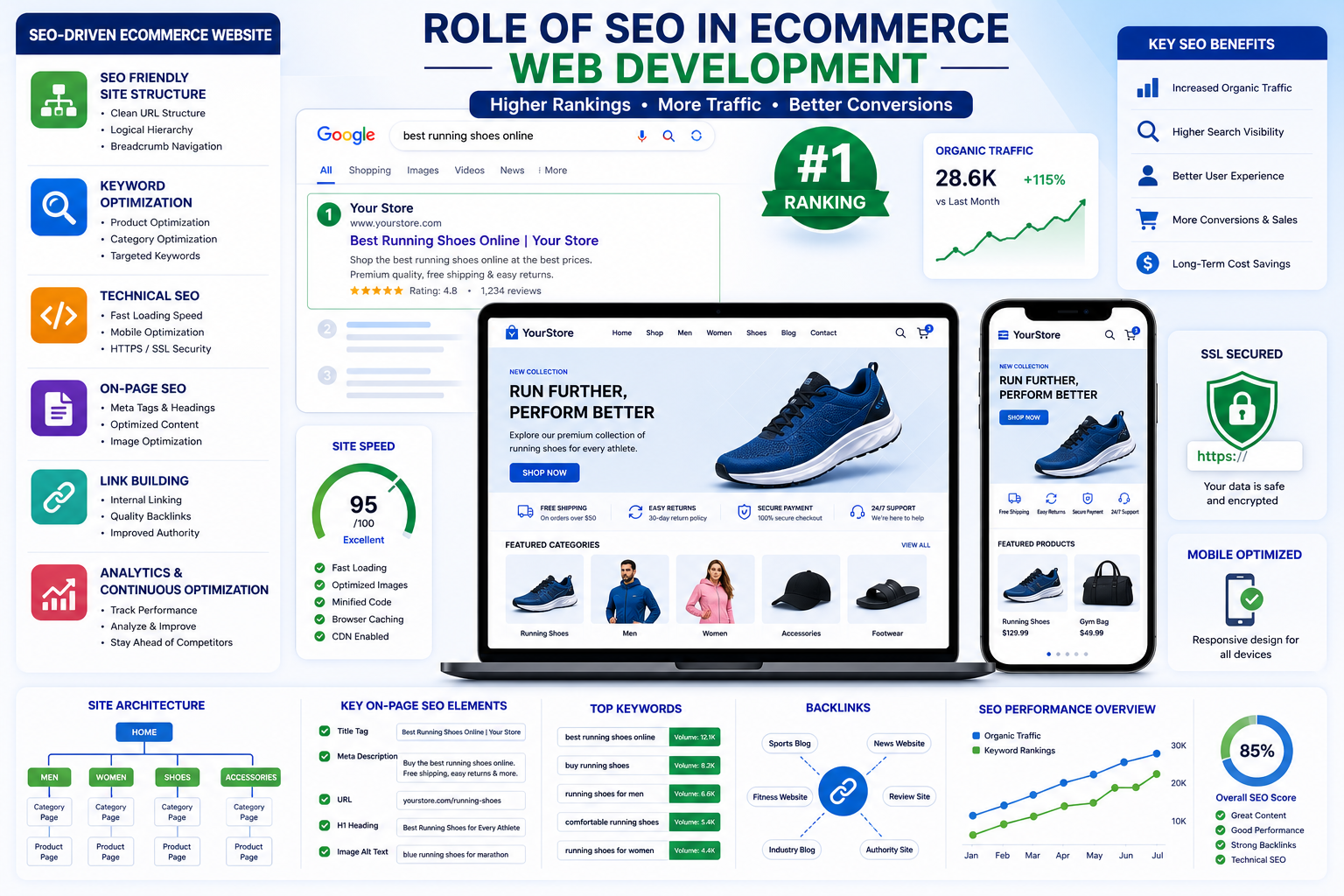
In the crowded digital marketplace, having a beautifully designed ecommerce website is not enough. If your target audience cannot find your store on search engines, your chances of generating consistent sales are limited. This is where Search Engine Optimization (SEO) becomes a crucial component of success.
Professional ecommerce web development services integrate SEO best practices into the foundation of your website, ensuring it is not only visually appealing but also highly discoverable. In this blog, we’ll explore the role of SEO in ecommerce development and how it helps drive traffic, improve visibility, and boost conversions.
H2: Understanding SEO in Ecommerce
SEO is the process of optimizing your website to rank higher in search engine results pages (SERPs). For ecommerce businesses, this means making product pages, category pages, and content easily discoverable by potential customers.
H3: Why SEO Matters for Ecommerce
Effective SEO leads to:
- Increased organic traffic
- Higher visibility in search engines
- Better brand credibility
- Long-term cost savings compared to paid ads
Unlike paid advertising, SEO provides sustainable growth over time.
H3: How Ecommerce SEO Differs
Ecommerce SEO focuses on:
- Product and category optimization
- Handling large volumes of pages
- Managing duplicate content
- Optimizing for transactional keywords
This makes it more complex than traditional website SEO.
H2: SEO-Friendly Website Structure
A well-structured website is essential for both users and search engines.
H3: Clean URL Structure
SEO-friendly URLs are:
- Short and descriptive
- Keyword-rich
- Easy to read
For example, a product URL should clearly describe the item rather than using random numbers or symbols.
H3: Logical Site Architecture
A clear hierarchy helps search engines crawl your website efficiently.
Best practices include:
- Organized categories and subcategories
- Internal linking between pages
- Breadcrumb navigation
Ecommerce web development services ensure your site structure supports both usability and SEO.
H2: Keyword Optimization in Ecommerce Development
Keywords are the foundation of SEO. They help search engines understand what your pages are about.
H3: Product Page Optimization
Each product page should include:
- Target keywords in titles and descriptions
- Unique product descriptions
- Optimized image alt text
H3: Category Page Optimization
Category pages should target broader keywords and include:
- Informative content
- Internal links to products
- Optimized headings
Professional ecommerce web development services ensure keywords are implemented naturally and effectively.
H2: Technical SEO in Ecommerce Websites
Technical SEO focuses on improving the backend aspects of your website to enhance performance and visibility.
H3: Website Speed Optimization
Fast-loading websites rank higher and provide better user experiences.
Developers optimize speed through:
- Image compression
- Code minimization
- Content delivery networks (CDNs)
H3: Mobile Optimization
Search engines prioritize mobile-friendly websites. Responsive design ensures your site performs well on all devices.
H3: Secure Website (HTTPS)
Security is a ranking factor. SSL certificates protect user data and build trust with both customers and search engines.
H2: Content Strategy for Ecommerce SEO
Content plays a vital role in driving organic traffic and engaging users.
H3: Product Descriptions
Unique and detailed product descriptions help:
- Improve search rankings
- Provide value to customers
- Reduce duplicate content issues
H3: Blog and Informational Content
Adding blogs to your ecommerce site helps target informational keywords and attract a wider audience.
Examples include:
- Buying guides
- Product comparisons
- Industry trends
Ecommerce web development services often include content integration strategies to support SEO efforts.
H2: On-Page SEO Elements
On-page SEO involves optimizing individual pages to improve rankings.
H3: Meta Tags and Headings
Important elements include:
- Title tags with target keywords
- Meta descriptions that encourage clicks
- Proper use of H1, H2, and H3 headings
H3: Image Optimization
Images should be:
- Compressed for faster loading
- Tagged with descriptive alt text
- Properly named with relevant keywords
These practices improve both SEO and accessibility.
H2: Link Building and Internal Linking
Links play a crucial role in SEO by helping search engines understand the importance of your pages.
H3: Internal Linking
Internal links:
- Connect related pages
- Improve navigation
- Distribute page authority
H3: External Backlinks
High-quality backlinks from reputable websites increase your domain authority and improve search rankings.
Ecommerce web development services ensure proper linking strategies are implemented from the start.
H2: Analytics and Continuous Optimization
SEO is not a one-time effort—it requires ongoing monitoring and improvement.
H3: Tracking Performance
Tools like Google Analytics and Search Console help track:
- Traffic sources
- Keyword rankings
- User behavior
H3: Continuous Improvement
Regular updates and optimizations include:
- Updating content
- Fixing broken links
- Improving page speed
Data-driven decisions help maintain and improve search rankings over time.