


New 05 May 2026
The Role of SEO in Ecom Website Development for Higher Rankings

Writen by Admin
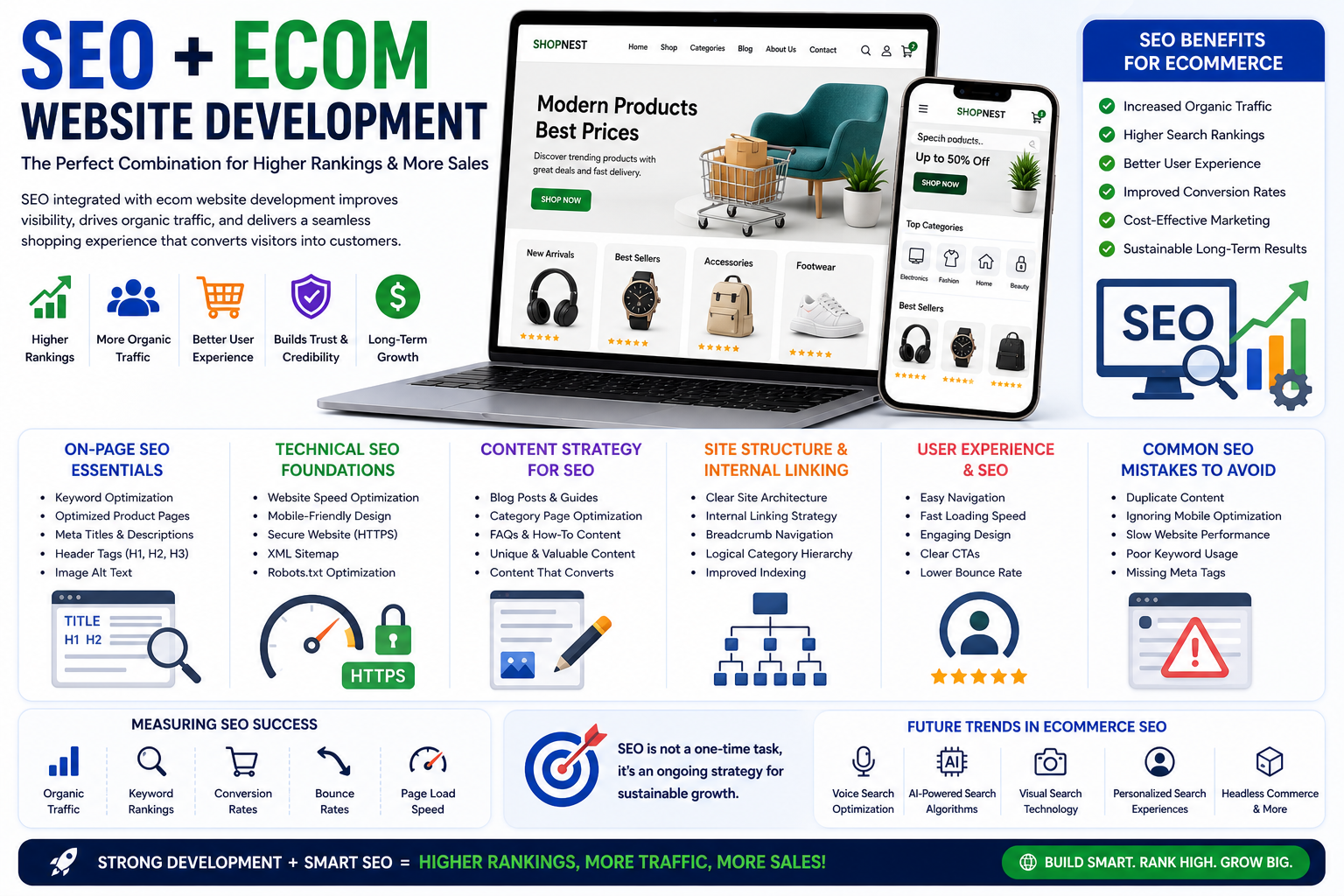
Building an ecommerce website is only the first step toward online success. Without visibility on search engines, even the most well-designed store may struggle to attract customers. This is why SEO (Search Engine Optimization) plays a crucial role in ecom website development.
SEO is not just about adding keywords—it involves optimizing every aspect of your website to improve its visibility, usability, and performance. When integrated properly during the development phase, SEO can drive consistent organic traffic and significantly increase sales.
In this blog, we’ll explore how SEO and ecom website development work together to achieve higher search rankings and long-term business growth.
Why SEO Matters in Ecommerce
Search engines are one of the primary sources of traffic for ecommerce websites. When your website ranks higher in search results, it becomes more visible to potential customers actively looking for your products.
Key benefits of SEO in ecom website development include:
- Increased organic traffic
- Higher brand visibility
- Better user experience
- Improved credibility and trust
- Long-term cost-effective marketing
Without SEO, your website may rely heavily on paid advertising, which can be expensive and unsustainable.
On-Page SEO Essentials for Ecommerce Websites
1. Keyword Optimization
Keywords are the foundation of SEO. In ecom website development, integrating relevant keywords—such as “ecom website development”—into your content is essential.
Best practices include:
- Using keywords naturally in product descriptions
- Optimizing titles and headings (H1, H2, H3)
- Including keywords in meta descriptions
- Avoiding keyword stuffing
Proper keyword usage helps search engines understand your content and rank it accordingly.
2. Optimized Product Pages
Each product page should be treated as a unique SEO opportunity. Well-optimized product pages can attract targeted traffic and increase conversions.
Important elements include:
- Unique product descriptions
- High-quality images with alt text
- Customer reviews
- Clear pricing and availability
Avoid using duplicate content, as it can negatively impact your search rankings.
3. Clean URL Structure
A well-structured URL is both user-friendly and search-engine-friendly.
Examples of good practices:
- Short and descriptive URLs
- Inclusion of relevant keywords
- Avoiding unnecessary parameters
Clean URLs improve readability and make it easier for search engines to index your pages.
Technical SEO in Ecom Website Development
Technical SEO ensures that your website is easy for search engines to crawl and index.
1. Website Speed Optimization
Page speed is a critical ranking factor. Slow websites can lead to higher bounce rates and lower rankings.
Optimization techniques include:
- Compressing images
- Using fast hosting services
- Minimizing code
- Leveraging browser caching
A faster website improves both SEO and user experience.
2. Mobile Optimization
Search engines prioritize mobile-friendly websites. Ecom website development must ensure full responsiveness across all devices.
Mobile optimization includes:
- Responsive design
- Fast mobile loading speeds
- Easy navigation on smaller screens
A mobile-friendly website can significantly boost your rankings.
3. Secure Website (HTTPS)
Security is a ranking factor and a trust signal for users. Implementing HTTPS ensures that data is encrypted and protected.
Benefits include:
- Improved search rankings
- Increased customer trust
- Secure transactions
A secure website is essential for both SEO and user confidence.
Content Strategy for Ecommerce SEO
Content plays a vital role in attracting and engaging users. A strong content strategy complements ecom website development efforts.
Effective content strategies include:
- Writing informative blog posts
- Creating buying guides
- Publishing FAQs
- Optimizing category pages
High-quality content helps establish authority and improves search engine visibility.
Internal Linking and Site Structure
A well-organized website structure makes it easier for users and search engines to navigate your site.
Best practices include:
- Linking related products
- Creating clear category hierarchies
- Using breadcrumb navigation
Internal linking distributes page authority and improves indexing.
The Role of User Experience in SEO
User experience (UX) is closely tied to SEO performance. Search engines consider user behavior when ranking websites.
Important UX factors include:
- Easy navigation
- Fast loading speeds
- Engaging design
- Clear calls to action
A positive user experience leads to longer visit durations and higher rankings.
Common SEO Mistakes to Avoid
Many businesses make critical SEO mistakes during ecom website development. Avoiding these errors can improve your results.
Common mistakes include:
- Ignoring mobile optimization
- Using duplicate content
- Slow website performance
- Poor keyword usage
- Lack of technical SEO
Addressing these issues early can save time and improve your rankings.
Measuring SEO Success
Tracking performance is essential to understand the effectiveness of your SEO efforts.
Key metrics include:
- Organic traffic
- Keyword rankings
- Conversion rates
- Bounce rates
- Page load speed
Using analytics tools helps identify areas for improvement and refine your strategy.
Future Trends in Ecommerce SEO
SEO continues to evolve, and businesses must stay updated with the latest trends.
Emerging trends include:
- Voice search optimization
- AI-driven search algorithms
- Visual search technology
- Personalized search results
Incorporating these trends into your ecom website development strategy can give you a competitive edge.