


New 05 May 2026
Step-by-Step Process of Ecom Website Development for Beginners

Writen by Admin
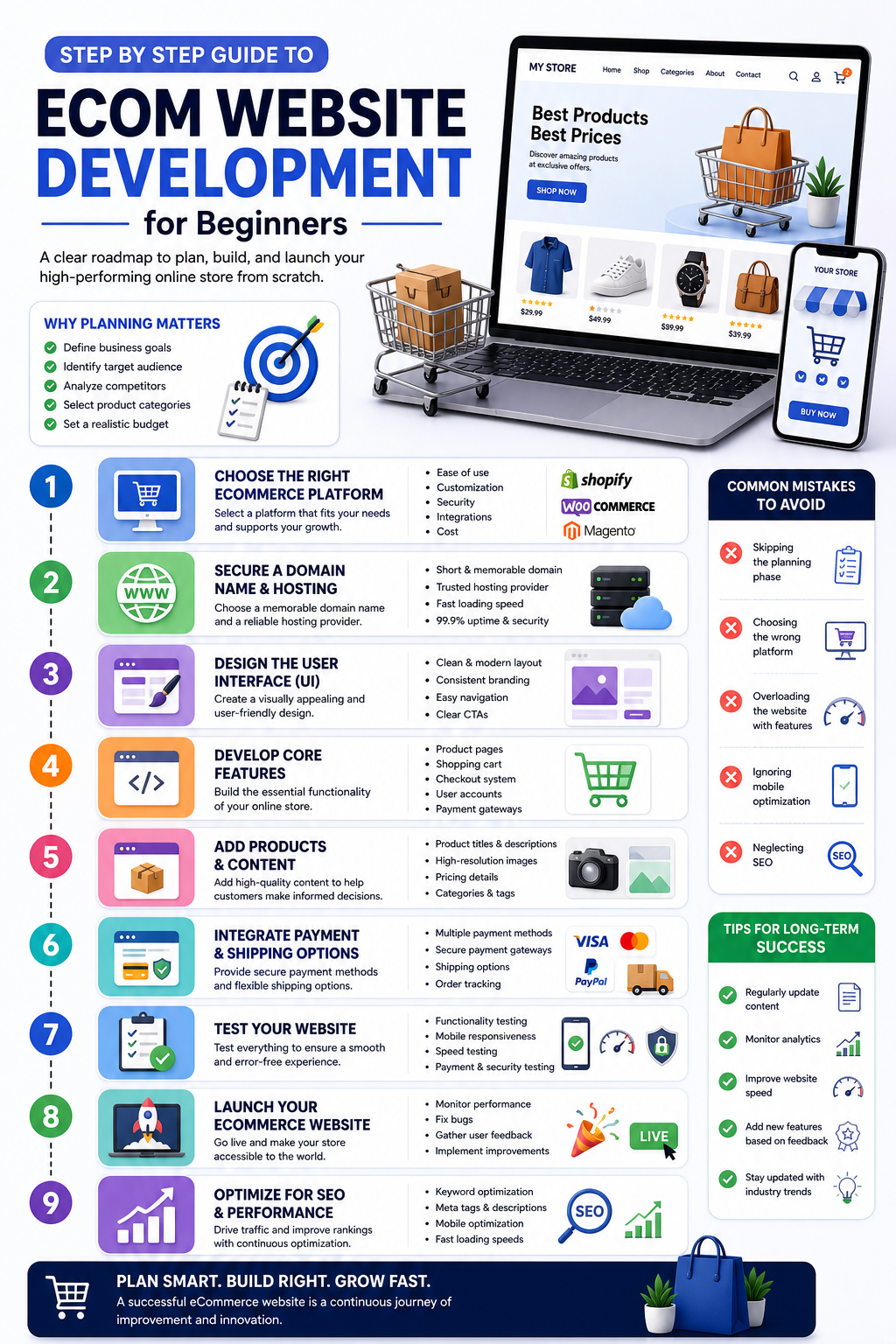
Starting an online store can feel overwhelming, especially for beginners who are unfamiliar with the technical aspects of building a website. However, with a clear roadmap and the right approach, ecom website development becomes a structured and manageable process.
From planning and design to launch and optimization, each stage plays a crucial role in creating a successful ecommerce platform. In this guide, we break down the step-by-step process of ecom website development to help you build a high-performing online store from scratch.
Understanding the Importance of Planning
Before jumping into development, proper planning is essential. Many ecommerce projects fail because businesses skip this critical phase.
Planning involves:
- Defining business goals
- Identifying target audience
- Analyzing competitors
- Selecting product categories
- Setting a realistic budget
A well-defined plan ensures that your ecom website development process stays focused and aligned with your objectives.
Step 1: Choosing the Right Ecommerce Platform
Selecting the right platform is one of the most important decisions in ecom website development. Your choice will affect functionality, scalability, and overall performance.
Popular platform options include:
- Hosted platforms (easy to use, quick setup)
- Self-hosted solutions (more control and customization)
When choosing a platform, consider:
- Ease of use
- Customization options
- Security features
- Integration capabilities
- Cost
The right platform provides a strong foundation for your ecommerce website.
Step 2: Securing a Domain Name and Hosting
Your domain name represents your brand online, while hosting determines your website’s performance and reliability.
Best practices include:
- Choosing a short, memorable domain name
- Using a trusted hosting provider
- Ensuring fast loading speeds
- Prioritizing uptime and security
Reliable hosting is essential for maintaining a smooth user experience.
Step 3: Designing the User Interface (UI)
Design plays a crucial role in how users perceive your website. A visually appealing and intuitive design enhances engagement and encourages conversions.
Key design elements include:
- Clean and modern layout
- Consistent branding
- Easy navigation
- Clear call-to-action buttons
During ecom website development, focus on creating a design that is both attractive and functional.
Step 4: Developing Core Features
Once the design is finalized, the next step is building the core functionality of your ecommerce website.
Essential features include:
- Product pages
- Shopping cart
- Checkout system
- User accounts
- Payment gateways
This stage is where your website starts to take shape and become fully functional.
Step 5: Adding Products and Content
Content is a key component of any ecommerce website. Adding high-quality product information helps customers make informed decisions.
Important elements include:
- Product titles and descriptions
- High-resolution images
- Pricing details
- Categories and tags
Well-organized content improves user experience and supports SEO efforts.
Step 6: Integrating Payment and Shipping Options
A seamless payment and shipping system is essential for completing transactions efficiently.
Ecom website development should include:
- Multiple payment methods (cards, digital wallets)
- Secure payment gateways
- Shipping options and cost calculations
- Order tracking features
Providing flexibility in payment and delivery enhances customer satisfaction.
Step 7: Testing Your Website
Before launching, thorough testing is necessary to ensure everything works as expected.
Testing should cover:
- Website functionality
- Mobile responsiveness
- Page loading speed
- Payment processing
- Security features
Identifying and fixing issues early prevents problems after launch.
Step 8: Launching Your Ecommerce Website
Once testing is complete, your website is ready to go live. However, launching is just the beginning.
Post-launch activities include:
- Monitoring performance
- Fixing bugs
- Gathering user feedback
- Implementing improvements
A successful launch sets the stage for long-term growth.
Step 9: Optimizing for SEO and Performance
To attract traffic and generate sales, your website must be optimized for search engines.
SEO strategies include:
- Keyword optimization (including “ecom website development”)
- Meta tags and descriptions
- Mobile optimization
- Fast loading speeds
Continuous optimization ensures better visibility and higher rankings.
Common Mistakes Beginners Should Avoid
Beginners often make avoidable mistakes during ecom website development. Being aware of these can save time and resources.
Common mistakes include:
- Skipping the planning phase
- Choosing the wrong platform
- Overloading the website with features
- Ignoring mobile optimization
- Neglecting SEO
Focusing on simplicity and user experience leads to better results.
Tips for Long-Term Success
Building an ecommerce website is an ongoing process. To stay competitive, businesses must continuously improve and adapt.
Key tips include:
- Regularly updating content
- Monitoring analytics
- Improving website speed
- Adding new features based on user feedback
- Staying updated with industry trends
Consistency and innovation are key to sustained growth.