


New 05 May 2026
Mobile Optimization in Ecom Website Development – Why It Matters More Than Ever

Writen by Admin
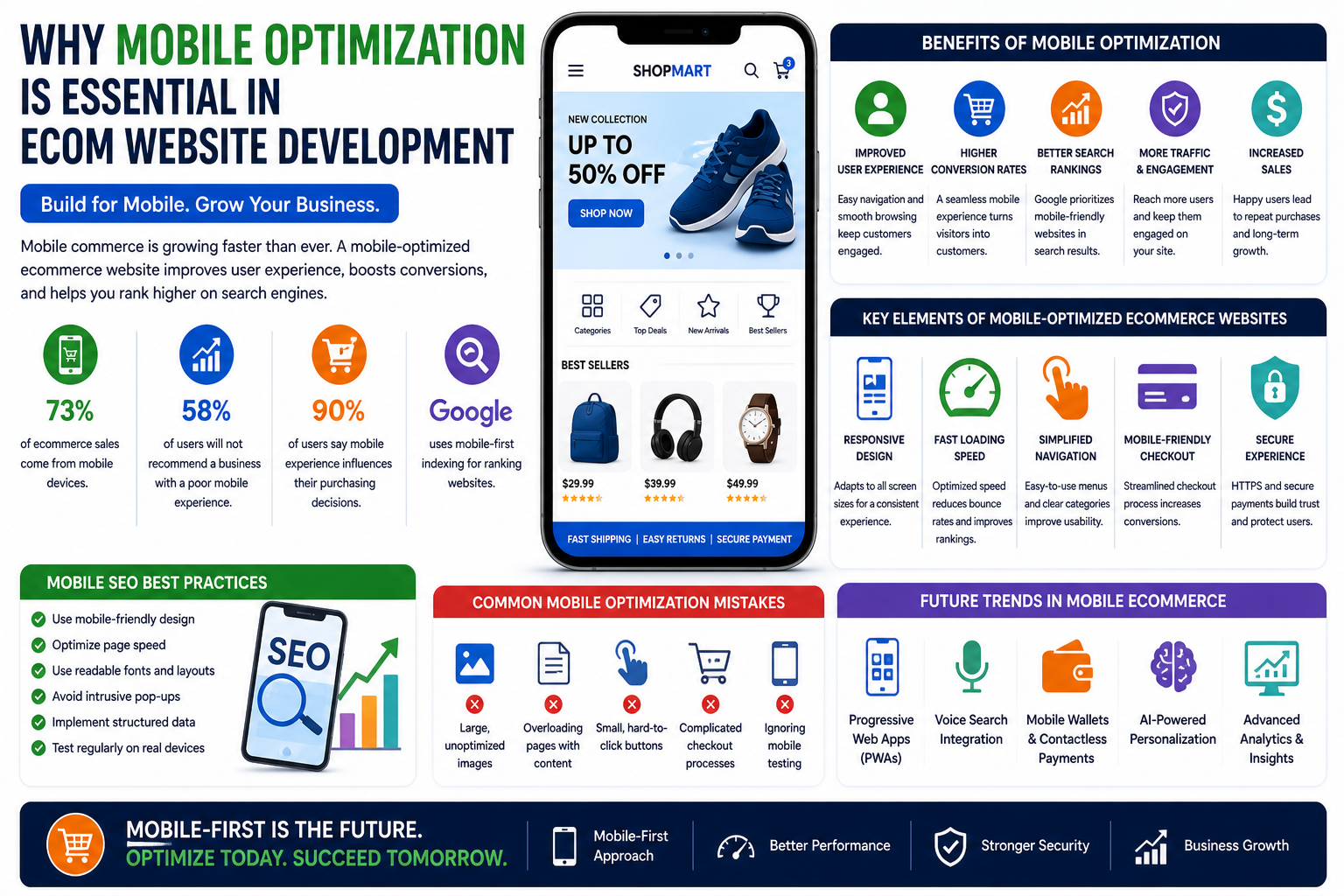
The way people shop online has changed dramatically over the past few years. Mobile devices have become the primary tool for browsing, comparing, and purchasing products. As a result, mobile optimization is no longer optional—it is a fundamental part of ecom website development.
Businesses that fail to deliver a seamless mobile experience risk losing a significant portion of their potential customers. On the other hand, those that prioritize mobile optimization can increase engagement, improve conversions, and boost search engine rankings.
In this blog, we’ll explore why mobile optimization is critical and how it impacts the success of your ecommerce website.
The Rise of Mobile Commerce
Mobile commerce, also known as m-commerce, continues to grow at a rapid pace. A large percentage of online shoppers now use smartphones to browse and purchase products.
Key reasons for this shift include:
- Convenience of shopping anytime, anywhere
- Faster internet speeds
- Improved mobile device capabilities
- User-friendly mobile apps and websites
This trend highlights the importance of incorporating mobile-first strategies into ecom website development.
What Is Mobile Optimization?
Mobile optimization refers to designing and developing your website to function efficiently on mobile devices such as smartphones and tablets.
It involves:
- Responsive design
- Fast loading speeds
- Touch-friendly navigation
- Optimized content layout
A mobile-optimized website ensures users have a smooth and enjoyable experience, regardless of the device they use.
Benefits of Mobile Optimization in Ecommerce
1. Improved User Experience
User experience is one of the most important factors in ecommerce success. A mobile-friendly website makes it easy for users to browse products, read descriptions, and complete purchases.
Features that enhance UX include:
- Simple navigation menus
- Clear product displays
- Easy-to-click buttons
- Minimal scrolling
A positive user experience leads to higher customer satisfaction and repeat visits.
2. Higher Conversion Rates
A seamless mobile experience directly impacts conversions. When users can easily navigate and complete transactions, they are more likely to make purchases.
Mobile optimization helps:
- Reduce cart abandonment
- Simplify checkout processes
- Increase engagement
Even small improvements in mobile usability can lead to significant increases in sales.
3. Better Search Engine Rankings
Search engines prioritize mobile-friendly websites in their rankings. This means that mobile optimization is essential for SEO success.
Ecom website development that focuses on mobile optimization benefits from:
- Higher visibility in search results
- Increased organic traffic
- Improved site performance metrics
Ignoring mobile optimization can negatively impact your rankings and visibility.
Key Elements of Mobile-Optimized Ecommerce Websites
1. Responsive Design
Responsive design ensures that your website automatically adjusts to different screen sizes.
Benefits include:
- Consistent user experience across devices
- Reduced need for separate mobile sites
- Easier maintenance
Responsive design is a cornerstone of modern ecom website development.
2. Fast Loading Speed
Mobile users expect websites to load quickly. Slow-loading pages can lead to frustration and high bounce rates.
Optimization techniques include:
- Compressing images
- Minimizing code
- Using fast hosting services
- Implementing caching
Speed is a critical factor in both user experience and SEO.
3. Simplified Navigation
Navigation should be intuitive and easy to use on smaller screens.
Best practices include:
- Hamburger menus
- Clear categories
- Sticky navigation bars
- Easy access to search functionality
Simplified navigation helps users find what they need quickly.
4. Mobile-Friendly Checkout
The checkout process must be streamlined for mobile users.
Key features include:
- Autofill forms
- Minimal input fields
- Multiple payment options
- Guest checkout
A smooth checkout experience reduces friction and increases conversions.
Common Mobile Optimization Mistakes
Many businesses overlook important aspects of mobile optimization during ecom website development.
Common mistakes include:
- Using large, unoptimized images
- Overloading pages with content
- Small, hard-to-click buttons
- Complicated checkout processes
- Ignoring mobile testing
Avoiding these mistakes can significantly improve mobile performance.
Mobile SEO Best Practices
Mobile optimization and SEO go hand in hand. Implementing mobile SEO best practices can improve your search rankings.
Important strategies include:
- Using mobile-friendly design
- Optimizing page speed
- Avoiding intrusive pop-ups
- Using readable fonts and layouts
These practices ensure that your website meets search engine requirements and user expectations.
Future Trends in Mobile Ecommerce
Mobile technology continues to evolve, and businesses must stay updated to remain competitive.
Emerging trends include:
- Progressive Web Apps (PWAs)
- Voice search integration
- Mobile wallets and contactless payments
- AI-powered personalization
Incorporating these trends into your ecom website development strategy can enhance user experience and drive growth.