


New 04 May 2026
Latest Trends Followed by Ecommerce Web Development Companies

Writen by Admin
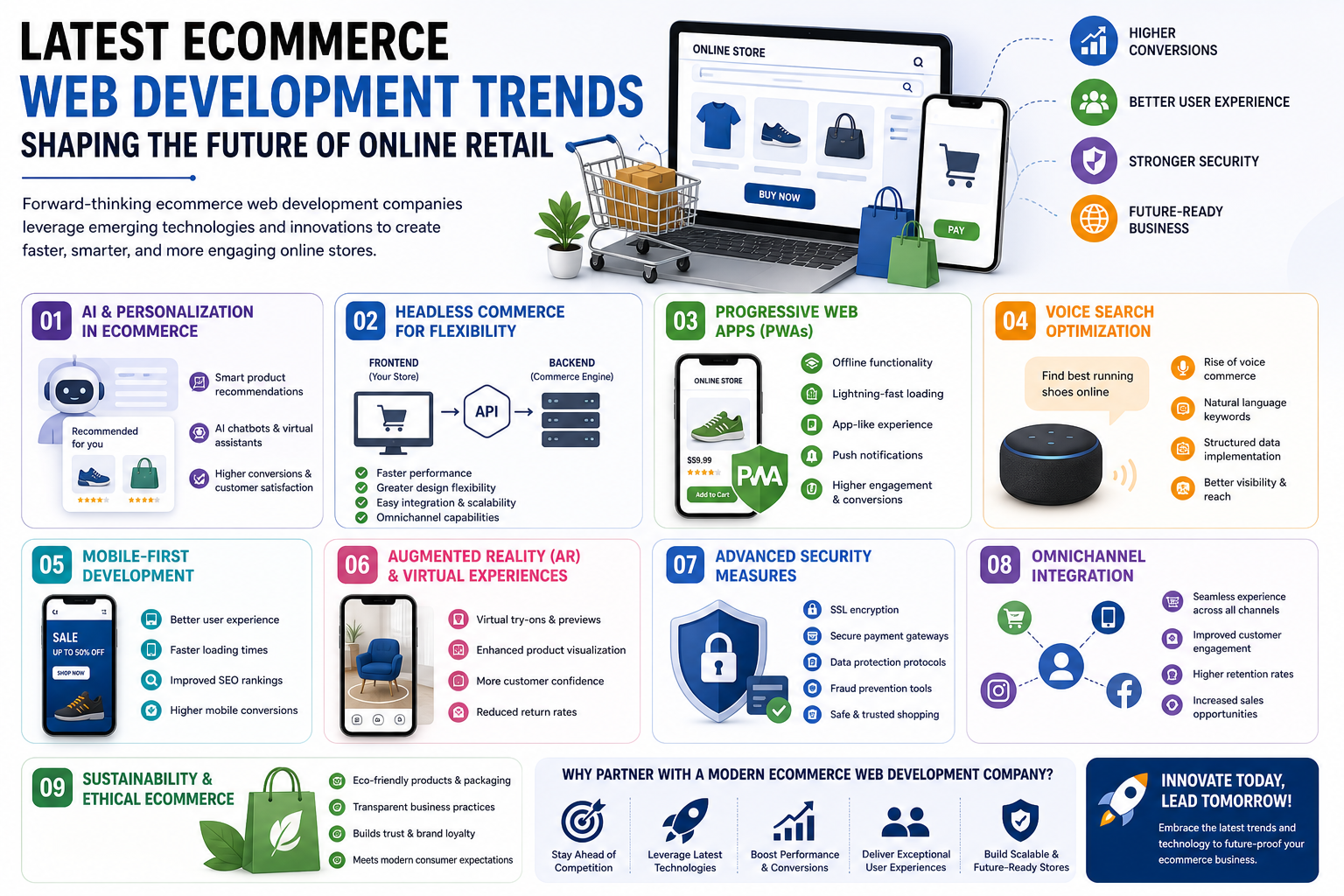
The ecommerce industry is constantly evolving, driven by changing consumer behavior, technological advancements, and increasing competition. To stay ahead, businesses must adapt to the latest innovations and deliver exceptional online experiences. This is where a modern ecommerce web development company plays a crucial role.
A forward-thinking ecommerce web development company doesn’t just build websites—it implements cutting-edge trends that enhance performance, improve user engagement, and drive conversions. Staying updated with these trends ensures your online store remains competitive and future-ready.
In this blog, we’ll explore the latest trends followed by ecommerce web development companies and how they are shaping the future of online retail.
H2: AI and Personalization in Ecommerce
Artificial Intelligence (AI) has transformed how ecommerce websites interact with customers. Personalization is no longer optional—it’s expected.
H3: Smart Product Recommendations
AI-powered recommendation engines analyze user behavior, browsing history, and purchase patterns to suggest relevant products.
Benefits include:
- Increased average order value
- Higher conversion rates
- Enhanced customer experience
A professional ecommerce web development company integrates these systems to deliver a tailored shopping experience.
H3: Chatbots and Virtual Assistants
AI-driven chatbots provide instant customer support, answer queries, and guide users through the buying process.
Key advantages:
- 24/7 customer support
- Faster response times
- Improved customer satisfaction
H2: Headless Commerce for Flexibility
Headless commerce is becoming increasingly popular among businesses seeking greater flexibility and performance.
H3: What Is Headless Commerce?
Headless commerce separates the front-end (user interface) from the back-end (database and functionality). This allows developers to create highly customized user experiences.
H3: Benefits of Headless Architecture
A modern ecommerce web development company leverages headless commerce to provide:
- Faster website performance
- Greater design flexibility
- Seamless integration with multiple platforms
- Improved scalability
This approach is ideal for businesses looking to innovate and expand across multiple channels.
H2: Progressive Web Apps (PWAs)
Progressive Web Apps combine the best features of websites and mobile apps, offering a fast and engaging user experience.
H3: Key Features of PWAs
PWAs provide:
- Offline functionality
- Fast loading speeds
- App-like user experience
- Push notifications
A professional ecommerce web development company can convert your website into a PWA to improve performance and engagement.
H3: Impact on Conversions
PWAs significantly enhance user experience, leading to:
- Lower bounce rates
- Higher engagement
- Increased sales
H2: Voice Search Optimization
With the growing use of voice assistants, voice search is becoming an important trend in ecommerce.
H3: Rise of Voice Commerce
Consumers are increasingly using voice commands to search for products and make purchases. This shift requires ecommerce websites to adapt their SEO strategies.
H3: Optimization Strategies
An ecommerce web development company optimizes for voice search by:
- Using natural language keywords
- Implementing structured data
- Improving page speed
- Focusing on mobile responsiveness
Voice search optimization helps businesses reach a broader audience.
H2: Mobile-First Development
Mobile commerce continues to dominate the ecommerce landscape. A mobile-first approach is now a standard practice.
H3: Why Mobile-First Matters
Most users access ecommerce websites through mobile devices. A mobile-first design ensures:
- Better user experience
- Faster loading times
- Improved SEO rankings
H3: Key Mobile Features
A professional ecommerce web development company includes:
- Touch-friendly navigation
- Simplified checkout process
- Mobile-optimized images
- Responsive layouts
H2: Augmented Reality (AR) and Virtual Experiences
Augmented Reality is revolutionizing how customers interact with products online.
H3: Virtual Try-Ons
AR allows customers to visualize products before purchasing, such as trying on clothes or seeing how furniture fits in their space.
H3: Enhanced Product Visualization
High-quality 3D models and interactive features improve customer confidence and reduce return rates.
An innovative ecommerce web development company integrates AR to create immersive shopping experiences.
H2: Advanced Security Measures
As ecommerce grows, so do cybersecurity threats. Security is a top priority for modern ecommerce websites.
H3: Enhanced Data Protection
A professional ecommerce web development company implements:
- SSL encryption
- Secure payment gateways
- Data protection protocols
H3: Fraud Prevention Tools
Advanced security systems help detect and prevent fraudulent activities, protecting both businesses and customers.
H2: Omnichannel Integration
Today’s customers interact with brands across multiple platforms, including websites, mobile apps, social media, and marketplaces.
H3: Seamless Customer Experience
An ecommerce web development company ensures all channels are integrated, providing a consistent experience across platforms.
H3: Benefits of Omnichannel Strategy
- Improved customer engagement
- Higher retention rates
- Increased sales opportunities
H2: Sustainability and Ethical Ecommerce
Modern consumers are increasingly conscious of sustainability and ethical practices.
H3: Eco-Friendly Features
Ecommerce websites now include features that highlight sustainable products and practices.
H3: Transparent Business Practices
Providing clear information about sourcing, production, and shipping builds trust with customers.
A forward-thinking ecommerce web development company incorporates these elements to align with consumer expectations.