


New 30 Mar 2026
Key Technologies Used in Ecommerce Development Services in 2026

Writen by Admin
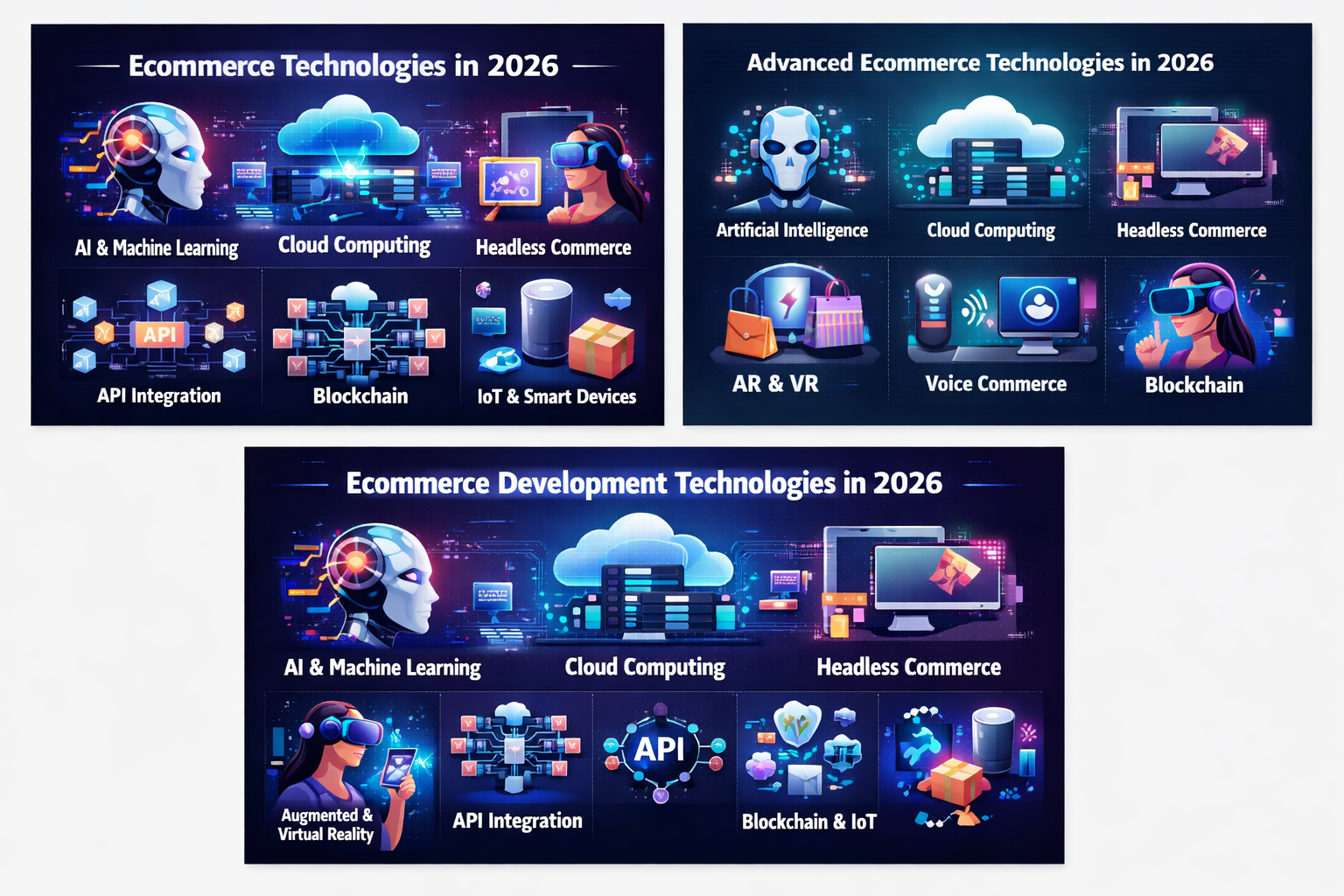
Technology is the backbone of every successful online store. As ecommerce continues to evolve, businesses must adopt the latest tools and frameworks to stay competitive. In 2026, modern ecommerce development services are driven by advanced technologies that enhance performance, improve user experience, and enable scalability.
From AI-powered personalization to cloud-based infrastructure, the right technology stack can transform your ecommerce platform into a high-performing digital ecosystem.
In this blog, we’ll explore the key technologies shaping ecommerce development services in 2026 and how they benefit online businesses.
Why Technology Matters in Ecommerce Development
Choosing the right technologies impacts every aspect of your ecommerce store, including:
- Website performance
- User experience
- Security
- Scalability
- Integration capabilities
Professional ecommerce development services ensure that your platform is built using the most suitable and future-ready technologies.
Core Technologies in Ecommerce Development Services
1. Frontend Development Technologies
The frontend is what users interact with directly. Modern ecommerce development focuses on creating fast, responsive, and visually appealing interfaces.
Key technologies include:
- HTML5, CSS3, and JavaScript
- Frameworks like React, Vue.js, and Angular
- Progressive Web App (PWA) technologies
These tools help create seamless and engaging user experiences across devices.
2. Backend Development Technologies
The backend powers the functionality of your ecommerce store.
Common backend technologies include:
- Node.js
- PHP frameworks (Laravel, Symfony)
- Python frameworks (Django, Flask)
These technologies ensure efficient data processing, secure transactions, and smooth operations.
3. Ecommerce Platforms and CMS
Ecommerce platforms provide the foundation for building online stores.
Popular platforms include:
- Shopify
- Magento (Adobe Commerce)
- WooCommerce
- BigCommerce
Ecommerce development services help businesses choose and customize the right platform based on their needs.
Advanced Technologies Transforming Ecommerce in 2026
1. Artificial Intelligence (AI) and Machine Learning
AI is revolutionizing ecommerce by enabling smarter and more personalized experiences.
Applications include:
- Product recommendations
- Chatbots and virtual assistants
- Predictive analytics
- Customer behavior analysis
AI-driven features help increase engagement and conversions.
2. Cloud Computing
Cloud technology provides flexibility and scalability for ecommerce platforms.
Benefits include:
- On-demand resources
- High uptime and reliability
- Easy scalability
- Cost efficiency
Cloud-based ecommerce solutions ensure your website can handle traffic spikes and growth.
3. Headless Commerce Architecture
Headless commerce separates the frontend from the backend, allowing greater flexibility.
Advantages include:
- Faster performance
- Custom frontend experiences
- Easy integration with multiple channels
This architecture is becoming increasingly popular in modern ecommerce development services.
4. API-First Development
APIs (Application Programming Interfaces) enable seamless communication between different systems.
Ecommerce development services use APIs to integrate:
- Payment gateways
- Shipping providers
- CRM and ERP systems
- Marketing tools
API-first development ensures smooth and efficient operations.
Emerging Technologies in Ecommerce
1. Augmented Reality (AR) and Virtual Reality (VR)
AR and VR enhance the online shopping experience by allowing customers to:
- Visualize products in real-world environments
- Try products virtually
- Make more informed purchase decisions
These technologies are especially useful in industries like fashion and furniture.
2. Voice Commerce
With the rise of voice assistants, voice commerce is gaining popularity.
Ecommerce development services now include:
- Voice search optimization
- Voice-enabled shopping features
This makes it easier for customers to shop using voice commands.
3. Blockchain Technology
Blockchain improves transparency and security in ecommerce.
Use cases include:
- Secure transactions
- Supply chain tracking
- Fraud prevention
Although still emerging, blockchain is expected to play a bigger role in the future.
4. Internet of Things (IoT)
IoT connects devices to create smarter shopping experiences.
Examples include:
- Smart home devices placing orders automatically
- Inventory tracking systems
- Personalized shopping experiences
IoT integration is becoming a valuable feature in ecommerce development.
How Technology Impacts Ecommerce Performance
Modern technologies improve ecommerce performance by:
- Reducing page load times
- Enhancing user experience
- Increasing security
- Enabling scalability
- Supporting advanced features
Businesses that adopt the latest technologies can stay ahead of competitors and meet customer expectations.
Choosing the Right Technology Stack
Selecting the right technology stack depends on:
- Business size and goals
- Budget
- Scalability requirements
- Integration needs
Professional ecommerce development services help you choose the best combination of technologies for your specific needs.
How AjMedia.ae Uses Advanced Technologies
At AjMedia.ae, we leverage cutting-edge technologies to build high-performance ecommerce platforms. Our ecommerce development services include:
- Modern frontend and backend development
- Cloud-based solutions
- AI-driven features
- Scalable architecture
We ensure your ecommerce website is future-ready and equipped for long-term success.
Future Trends in Ecommerce Technology
Looking ahead, ecommerce technology will continue to evolve with innovations such as:
- AI-powered automation
- Hyper-personalization
- Faster cloud infrastructure
- Enhanced immersive shopping experiences
Businesses that embrace these trends will gain a significant competitive advantage.