


New 03 May 2026
Key Features Every Ecommerce Website Must Have in 2026

Writen by Admin
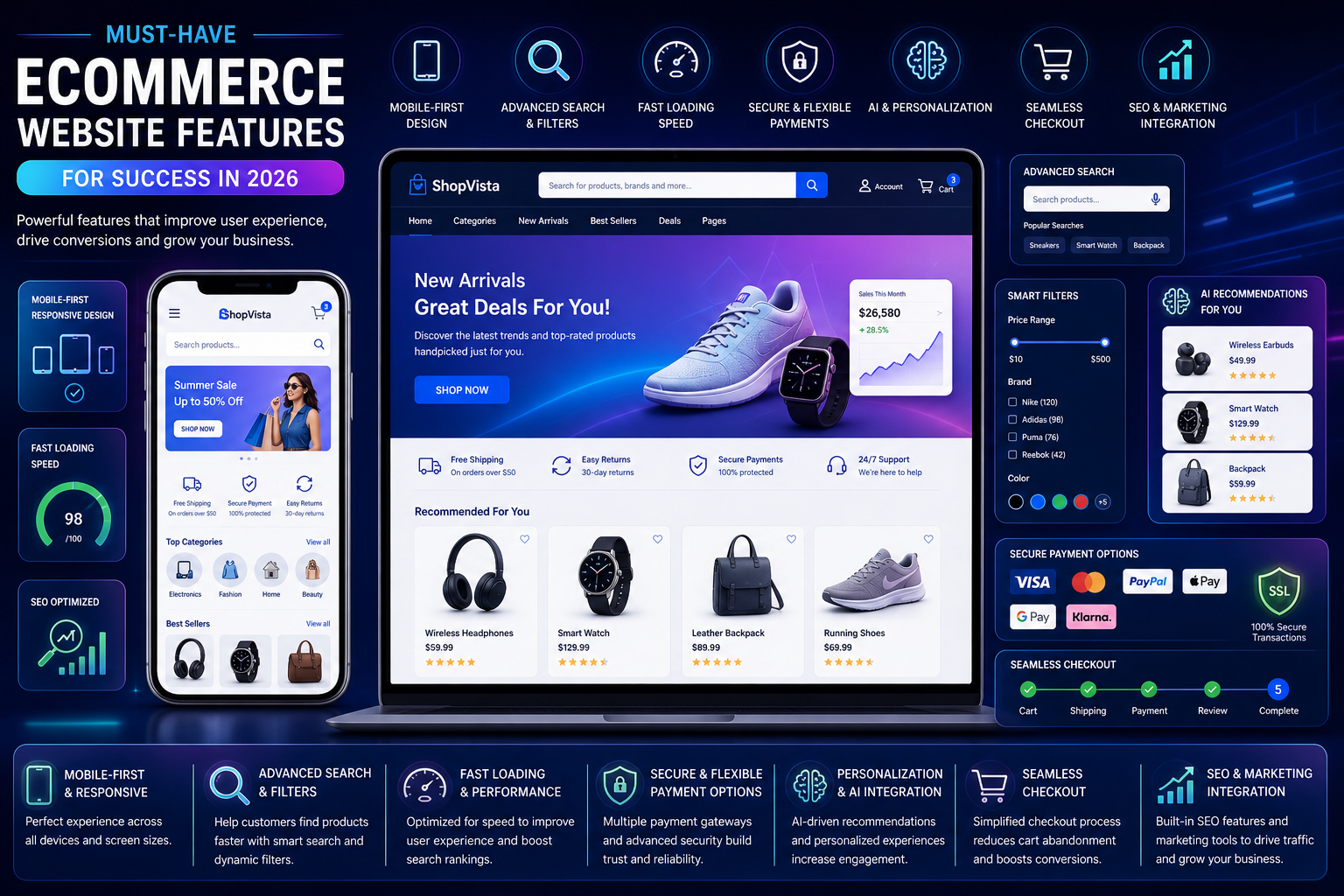
The ecommerce landscape is evolving faster than ever. With increasing competition and rising customer expectations, businesses must go beyond basic functionality to stay relevant. Simply having an online store is no longer enough—you need a high-performing, feature-rich platform that delivers exceptional user experiences.
This is where professional ecommerce web development services come into play. They help businesses integrate modern features that enhance usability, improve performance, and drive conversions. In this blog, we’ll explore the must-have features every ecommerce website should include in 2026 to remain competitive and profitable.
H2: Mobile-First and Responsive Design
In 2026, mobile commerce continues to dominate the online shopping space. A significant percentage of customers browse and purchase products using their smartphones.
H3: Why Mobile Optimization Matters
A mobile-friendly website ensures:
- Faster loading speeds on smartphones
- Easy navigation with touch-friendly elements
- Better readability without zooming
- Improved search engine rankings
Search engines prioritize mobile-first indexing, meaning your mobile site directly impacts your visibility.
H3: Responsive Design Best Practices
Professional ecommerce web development services ensure your site adapts seamlessly across all devices. This includes:
- Flexible layouts
- Optimized images
- Consistent user experience across screen sizes
Failing to optimize for mobile can result in lost sales and higher bounce rates.
H2: Advanced Search and Filtering Options
Customers expect to find products quickly and effortlessly. Advanced search functionality is no longer optional—it’s essential.
H3: Smart Search Capabilities
Modern ecommerce websites include:
- Auto-suggestions
- Voice search compatibility
- AI-powered product recommendations
- Error-tolerant search
These features help users locate products even if they make spelling mistakes or use vague terms.
H3: Dynamic Product Filters
Filters allow customers to narrow down options based on:
- Price
- Brand
- Size or color
- Ratings
This improves the shopping experience and reduces decision fatigue.
H2: Fast Loading Speed and Performance Optimization
Website speed plays a crucial role in user experience and conversions. Even a one-second delay can significantly reduce customer satisfaction.
H3: Importance of Speed
A fast-loading website leads to:
- Lower bounce rates
- Higher engagement
- Increased conversions
- Better SEO rankings
H3: Optimization Techniques
Ecommerce web development services implement performance enhancements such as:
- Image compression
- Content delivery networks (CDNs)
- Clean coding practices
- Lazy loading
These techniques ensure your website performs efficiently, even during high traffic periods.
H2: Secure and Flexible Payment Options
Trust is a major factor in ecommerce success. Customers need assurance that their transactions are safe.
H3: Multiple Payment Methods
Offering diverse payment options improves customer satisfaction. These include:
- Credit and debit cards
- Digital wallets
- Buy-now-pay-later services
- Bank transfers
H3: Enhanced Security Measures
Security features should include:
- SSL certificates
- PCI compliance
- Two-factor authentication
- Fraud detection systems
Professional ecommerce web development services ensure your site meets the highest security standards.
H2: Personalization and AI Integration
Personalization is transforming the ecommerce experience. Customers expect tailored recommendations and relevant content.
H3: Personalized Shopping Experience
AI-driven features include:
- Product recommendations based on browsing history
- Personalized email campaigns
- Dynamic homepage content
- Behavioral targeting
H3: Benefits of AI in Ecommerce
Integrating AI helps businesses:
- Increase average order value
- Improve customer retention
- Enhance user engagement
This level of personalization creates a more meaningful shopping experience.
H2: Seamless Checkout Experience
A complicated checkout process is one of the leading causes of cart abandonment.
H3: Simplified Checkout Process
Key elements of an optimized checkout include:
- Guest checkout option
- Minimal form fields
- Clear progress indicators
- Multiple payment options
H3: Reducing Cart Abandonment
Ecommerce web development services focus on:
- Auto-filled information
- Saved payment details
- Transparent pricing (no hidden fees)
These improvements encourage customers to complete their purchases.
H2: SEO and Marketing Integration
An ecommerce website must be optimized for search engines to attract organic traffic.
H3: Built-In SEO Features
Essential SEO elements include:
- Optimized product pages
- Keyword-rich URLs
- Meta tags and descriptions
- Structured data
H3: Marketing Tools Integration
Modern ecommerce websites integrate with:
- Email marketing platforms
- Social media channels
- Analytics tools
- CRM systems
These integrations help businesses track performance and improve marketing strategies.