


New 05 May 2026
How to Improve User Experience in Ecom Website Development

Writen by Admin
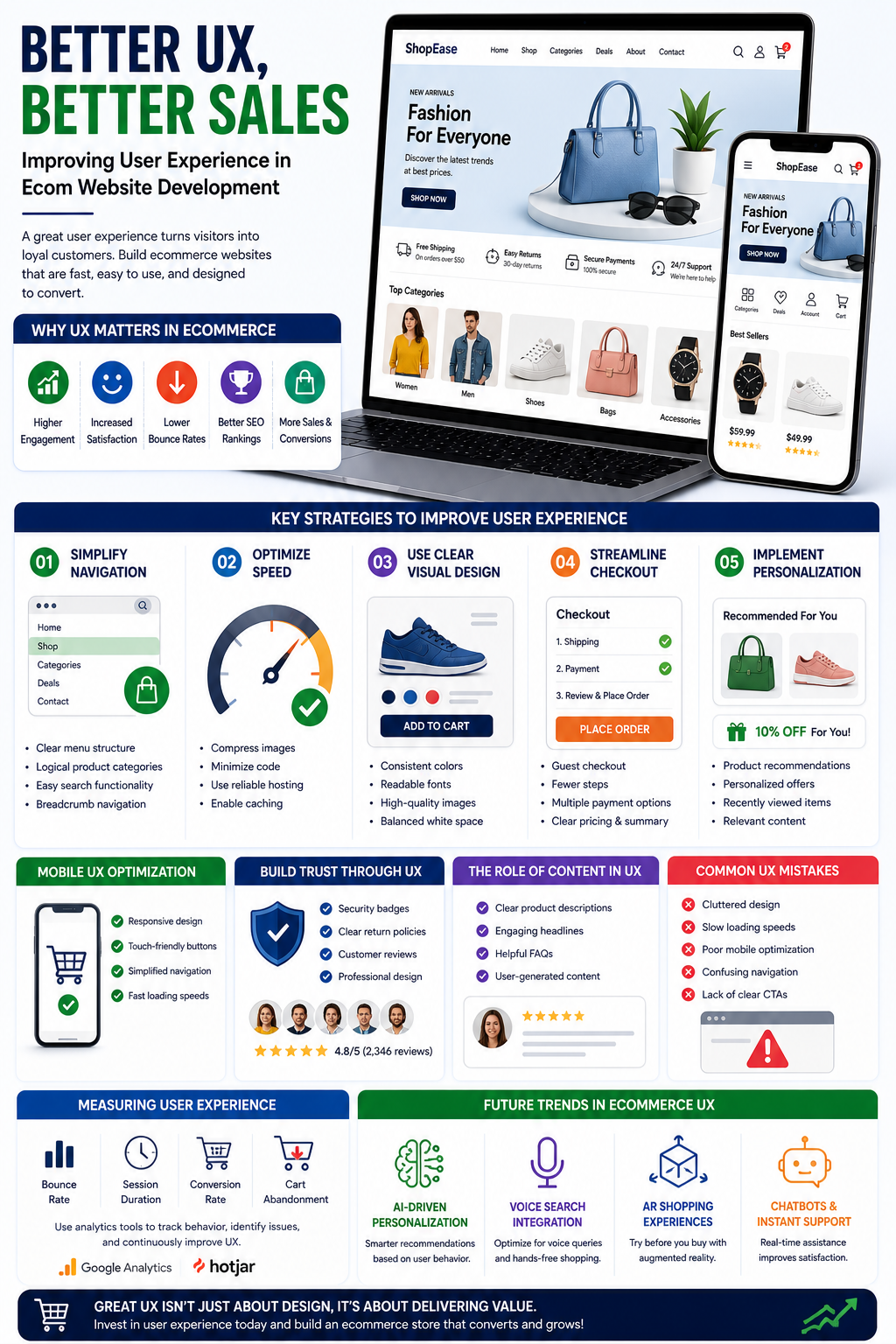
In the competitive world of online shopping, user experience (UX) has become a defining factor in the success of ecommerce businesses. Customers no longer choose a website based solely on products or pricing—they expect a seamless, fast, and enjoyable shopping journey.
This is where ecom website development plays a critical role. A well-developed website that prioritizes user experience can significantly increase engagement, reduce bounce rates, and boost conversions.
In this blog, we’ll explore how businesses can improve user experience through effective ecom website development strategies.
What Is User Experience in Ecommerce?
User experience refers to how users interact with and feel about your website. It encompasses everything from design and navigation to speed and functionality.
A positive user experience ensures that:
- Visitors can easily find products
- Navigation is intuitive
- Pages load quickly
- The checkout process is smooth
When users enjoy their experience, they are more likely to stay longer and make purchases.
Why UX Matters in Ecom Website Development
User experience directly impacts key performance metrics such as conversion rates, customer retention, and brand loyalty.
Benefits of strong UX include:
- Higher engagement rates
- Increased customer satisfaction
- Lower bounce rates
- Improved search engine rankings
Investing in UX during ecom website development ensures long-term business success.
Key Strategies to Improve User Experience
1. Simplify Website Navigation
Navigation is one of the most important aspects of user experience. If users cannot find what they’re looking for quickly, they are likely to leave.
Best practices include:
- Clear menu structure
- Logical product categories
- Easy-to-use search functionality
- Breadcrumb navigation
Simple navigation helps users move through your website effortlessly.
2. Optimize Website Speed
Speed is a critical factor in user experience. Slow websites frustrate users and increase bounce rates.
Ways to improve speed include:
- Compressing images
- Minimizing code
- Using reliable hosting
- Implementing caching techniques
A fast-loading website keeps users engaged and encourages exploration.
3. Use Clear and Compelling Visual Design
Visual design influences how users perceive your brand. A clean, modern design enhances credibility and trust.
Important elements include:
- Consistent color schemes
- Readable fonts
- High-quality images
- Balanced use of white space
A visually appealing website creates a positive first impression.
4. Streamline the Checkout Process
A complicated checkout process is one of the main reasons for cart abandonment. Ecom website development should focus on making this process as simple as possible.
Best practices include:
- Offering guest checkout
- Reducing the number of steps
- Providing multiple payment options
- Displaying clear pricing
A smooth checkout experience increases the likelihood of completed purchases.
5. Implement Personalization
Personalization enhances user experience by providing relevant content and recommendations.
Examples include:
- Suggested products based on browsing history
- Personalized offers and discounts
- Recently viewed items
Personalized experiences make users feel valued and increase engagement.
Mobile UX Optimization
With the rise of mobile commerce, optimizing user experience for mobile devices is essential.
Mobile UX improvements include:
- Responsive design
- Touch-friendly buttons
- Simplified navigation
- Fast loading speeds
A mobile-friendly website ensures a seamless experience across all devices.
Building Trust Through UX
Trust is a crucial component of user experience. Customers need to feel confident when interacting with your website.
Ways to build trust include:
- Displaying security badges
- Providing clear return policies
- Showing customer reviews and ratings
- Maintaining a professional design
Trustworthy websites encourage repeat purchases and customer loyalty.
The Role of Content in UX
Content plays a vital role in guiding users and helping them make decisions.
Effective content strategies include:
- Writing clear product descriptions
- Using engaging headlines
- Providing helpful FAQs
- Including user-generated content
High-quality content improves both user experience and SEO performance.
Common UX Mistakes to Avoid
Many businesses make mistakes that negatively impact user experience during ecom website development.
Common issues include:
- Cluttered design
- Slow loading speeds
- Poor mobile optimization
- Confusing navigation
- Lack of clear calls to action
Avoiding these mistakes can significantly enhance usability and performance.
Measuring User Experience
To improve UX, businesses must track and analyze user behavior.
Key metrics include:
- Bounce rate
- Session duration
- Conversion rate
- Cart abandonment rate
Using analytics tools helps identify problem areas and optimize the user journey.
Future Trends in Ecommerce UX
User experience continues to evolve with advancements in technology.
Emerging trends include:
- AI-driven personalization
- Voice search integration
- Augmented reality (AR) shopping
- Chatbots for instant support
Incorporating these innovations into ecom website development can provide a competitive advantage.