


New 05 May 2026
Future Trends in Ecom Website Development You Need to Know

Writen by Admin
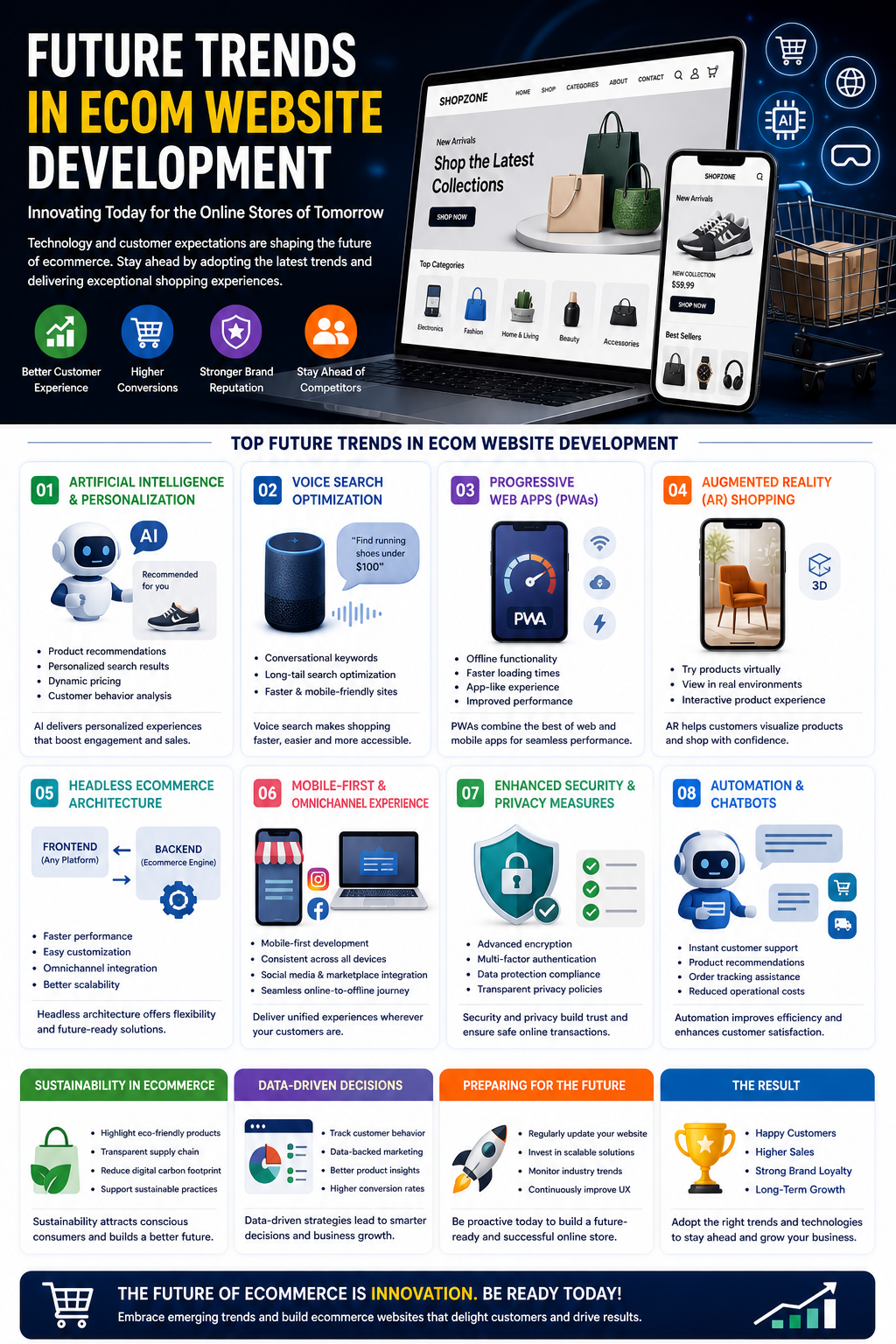
The ecommerce industry is evolving at a rapid pace, driven by advancements in technology and changing consumer behavior. To stay competitive, businesses must not only focus on current strategies but also prepare for what lies ahead.
This is where forward-thinking ecom website development becomes essential. By adopting emerging trends and technologies, businesses can enhance user experience, improve efficiency, and maintain a competitive edge.
In this blog, we’ll explore the most important future trends in ecom website development and how they are shaping the next generation of online stores.
Why Staying Updated with Trends Matters
Ecommerce is highly dynamic, and customer expectations continue to rise. Businesses that fail to adapt risk falling behind their competitors.
Keeping up with trends helps:
- Improve customer experience
- Increase conversion rates
- Enhance brand reputation
- Stay ahead of competitors
Integrating modern solutions into your ecom website development strategy ensures long-term success.
Top Future Trends in Ecom Website Development
1. Artificial Intelligence and Personalization
Artificial Intelligence (AI) is transforming the way ecommerce websites interact with users. AI-powered tools can analyze customer behavior and deliver personalized experiences.
Key applications include:
- Product recommendations
- Personalized search results
- Dynamic pricing strategies
- Customer behavior analysis
Personalization improves engagement and increases the likelihood of conversions.
2. Voice Search Optimization
With the growing use of voice assistants, voice search is becoming an important part of ecommerce.
Ecom website development must adapt by:
- Using conversational keywords
- Optimizing for long-tail search queries
- Improving site speed and mobile performance
Voice search makes it easier for users to find products quickly and conveniently.
3. Progressive Web Apps (PWAs)
Progressive Web Apps combine the best features of websites and mobile apps, offering a fast and reliable user experience.
Benefits of PWAs include:
- Offline functionality
- Faster loading times
- App-like interface
- Improved performance
PWAs are becoming a popular choice for modern ecommerce businesses.
4. Augmented Reality (AR) Shopping
Augmented Reality allows customers to visualize products in real-world environments before making a purchase.
Examples include:
- Trying on clothing virtually
- Viewing furniture in a room
- Exploring product features interactively
AR enhances the shopping experience and reduces uncertainty, leading to higher conversion rates.
5. Headless Ecommerce Architecture
Headless ecommerce separates the front-end and back-end of a website, allowing greater flexibility in design and functionality.
Advantages include:
- Faster performance
- Easy customization
- Seamless integration with multiple platforms
- Better scalability
Headless architecture is gaining popularity among businesses looking for advanced ecom website development solutions.
The Rise of Mobile-First and Omnichannel Experiences
Mobile commerce continues to dominate, and businesses must prioritize mobile-first development strategies.
In addition, omnichannel experiences are becoming essential, allowing customers to interact with brands across multiple platforms.
Key aspects include:
- Consistent experience across devices
- Integration with social media platforms
- Seamless transition between online and offline channels
These approaches improve customer engagement and brand loyalty.
Enhanced Security and Privacy Measures
As ecommerce grows, so do concerns about data security and privacy. Future ecom website development will focus heavily on protecting user information.
Important trends include:
- Advanced encryption technologies
- Multi-factor authentication
- Compliance with data protection regulations
- Transparent privacy policies
Strong security measures build trust and ensure safe transactions.
Automation and Chatbots
Automation is streamlining ecommerce operations and improving customer support.
Chatbots and automated systems can:
- Handle customer inquiries instantly
- Provide product recommendations
- Assist with order tracking
- Reduce operational costs
Automation improves efficiency and enhances the overall user experience.
Sustainability in Ecommerce
Sustainability is becoming an important consideration for consumers. Businesses are increasingly adopting eco-friendly practices in their operations.
Ecom website development can support sustainability by:
- Highlighting eco-friendly products
- Optimizing supply chain transparency
- Reducing digital carbon footprint
Sustainable practices can improve brand image and attract conscious consumers.
Data-Driven Decision Making
Data analytics is playing a bigger role in shaping ecommerce strategies. Businesses are using data to understand customer behavior and optimize performance.
Key benefits include:
- Improved marketing strategies
- Better product recommendations
- Enhanced user experience
- Increased conversion rates
Data-driven insights help businesses make informed decisions and stay competitive.
Preparing for the Future of Ecommerce
To stay ahead, businesses must be proactive in adopting new technologies and trends.
Preparation strategies include:
- Regularly updating your website
- Investing in scalable solutions
- Monitoring industry trends
- Continuously improving user experience
Forward-thinking ecom website development ensures long-term growth and success.