


New 05 May 2026
Essential Features Every Ecom Website Development Project Must Include

Writen by Admin
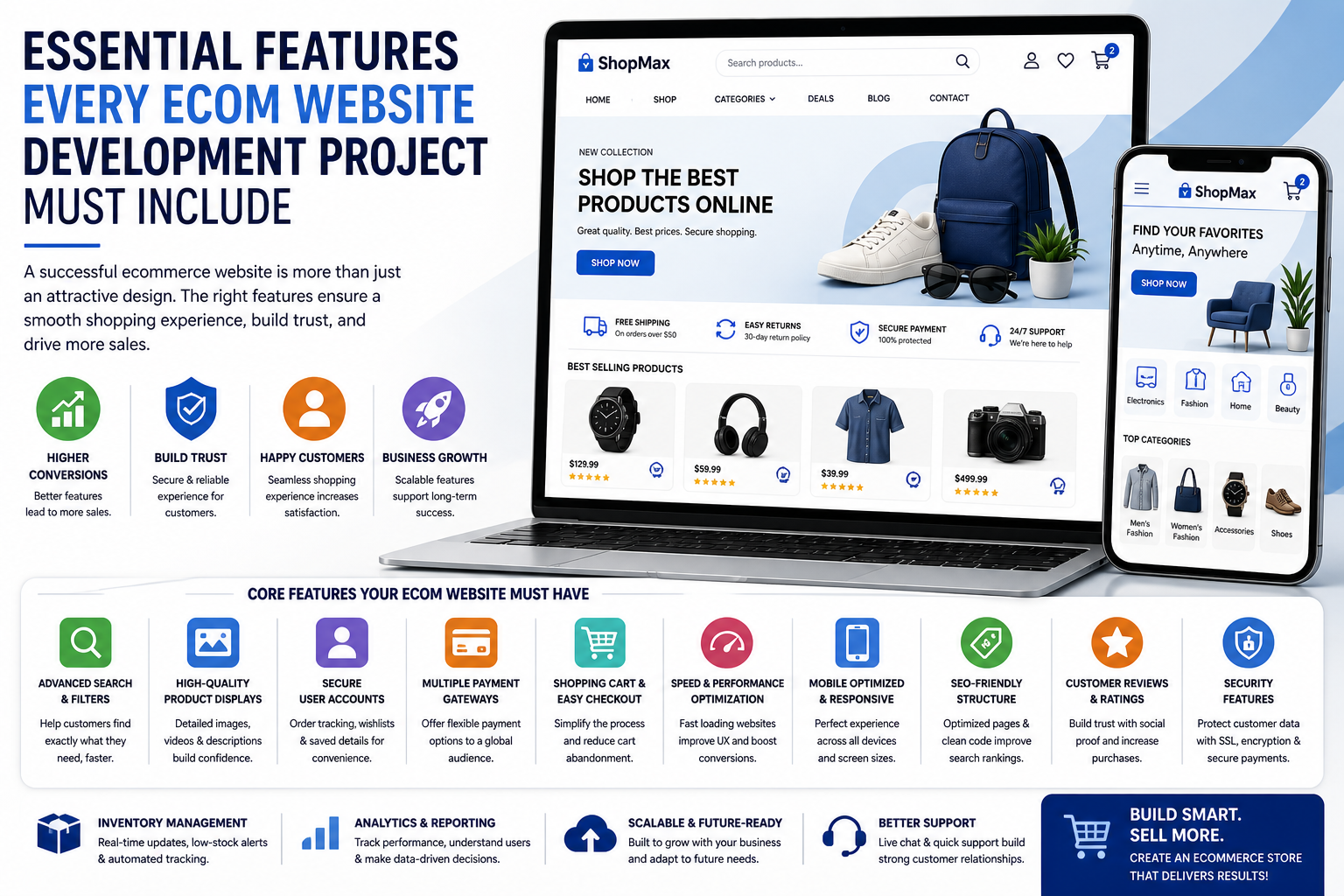
Launching a successful online store requires more than just an attractive design. Behind every high-performing ecommerce platform is a well-planned ecom website development strategy that focuses on functionality, user experience, and scalability.
With increasing competition in the digital marketplace, businesses must ensure their ecommerce websites include the right features to attract, engage, and convert customers. Missing even a few critical components can lead to lost sales and reduced customer satisfaction.
In this blog, we’ll explore the essential features that every ecom website development project must include to ensure long-term success.
Why Features Matter in Ecom Website Development
The features of your ecommerce website directly impact how users interact with your store. From browsing products to completing purchases, every step in the customer journey depends on how well your website functions.
A feature-rich website ensures:
- Smooth navigation
- Faster decision-making
- Enhanced customer trust
- Higher conversion rates
Without the right features, even the best marketing strategies may fail to deliver results.
Core Features Every Ecommerce Website Needs
1. Advanced Search and Filtering Options
Customers expect to find products quickly and easily. A robust search system is a fundamental part of ecom website development.
Key capabilities include:
- Auto-suggestions
- Filters by price, category, size, and brand
- Sorting options (popularity, newest, price)
These features help users narrow down their choices and improve their overall shopping experience.
2. High-Quality Product Displays
Product presentation plays a crucial role in influencing purchase decisions. Customers rely heavily on visuals and detailed descriptions when shopping online.
Essential elements include:
- High-resolution images
- Zoom functionality
- Multiple product angles
- Video demonstrations (if possible)
- Clear and concise descriptions
Strong product displays build confidence and reduce hesitation.
3. Secure User Accounts
User accounts make it easier for customers to manage their purchases and preferences. Ecom website development should include secure account management features.
Benefits include:
- Order tracking
- Saved addresses and payment methods
- Wishlist functionality
- Faster checkout
Security measures such as encrypted passwords and two-factor authentication further enhance user trust.
4. Multiple Payment Gateways
Offering a variety of payment options is essential for catering to a diverse audience. Customers prefer flexibility when it comes to completing transactions.
Popular payment options include:
- Credit and debit cards
- Digital wallets
- Buy-now-pay-later services
- Bank transfers
Integrating multiple payment gateways ensures a smoother checkout experience and reduces cart abandonment.
5. Shopping Cart and Easy Checkout
The shopping cart and checkout process must be intuitive and user-friendly. A complicated process can discourage customers from completing their purchases.
Best practices include:
- Clear cart overview
- Easy editing of items
- Transparent pricing
- One-page checkout
- Guest checkout option
Simplifying the checkout process significantly improves conversion rates.
Performance and Speed Optimization
A slow website can negatively impact both user experience and search engine rankings. Speed optimization is a critical part of ecom website development.
Techniques include:
- Minimizing HTTP requests
- Compressing images
- Using fast hosting services
- Implementing caching strategies
A fast-loading website keeps users engaged and encourages them to explore more products.
Mobile Optimization and Responsiveness
Mobile commerce continues to grow rapidly, making responsive design a necessity. Ecom website development must ensure that websites perform seamlessly across all devices.
Mobile optimization includes:
- Responsive layouts
- Touch-friendly navigation
- Fast mobile loading speeds
- Simplified checkout process
A mobile-friendly website not only improves user experience but also boosts search engine rankings.
SEO-Friendly Structure
Search engine visibility is essential for attracting organic traffic. An SEO-friendly website structure is a key component of successful ecom website development.
Important elements include:
- Clean and descriptive URLs
- Optimized product pages
- Proper use of headings (H1, H2, H3)
- Image alt text
- Internal linking
By incorporating SEO best practices, businesses can improve their online visibility and drive more traffic.
Customer Reviews and Ratings
Social proof plays a significant role in influencing buying decisions. Including customer reviews and ratings can build trust and encourage new customers to make purchases.
Benefits include:
- Increased credibility
- Better product insights
- Higher conversion rates
Encouraging customers to leave reviews can also improve engagement and brand loyalty.
Inventory Management System
Efficient inventory management is essential for maintaining product availability and avoiding overselling.
Ecom website development should include:
- Real-time stock updates
- Low-stock alerts
- Automated inventory tracking
This ensures smooth operations and a better customer experience.
Analytics and Reporting Tools
Understanding customer behavior is key to improving your ecommerce strategy. Analytics tools provide valuable insights into how users interact with your website.
Key metrics to track include:
- Traffic sources
- Conversion rates
- Bounce rates
- Customer behavior
Using this data, businesses can make informed decisions and optimize their performance.
Security Features
Security is a top priority in ecommerce. Customers need to feel confident that their personal and financial information is protected.
Essential security features include:
- SSL certificates
- Secure payment processing
- Data encryption
- Regular security updates
A secure website builds trust and protects both the business and its customers.