


New 05 May 2026
Custom vs Template Solutions in Ecom Website Development – Which Is Better?

Writen by Admin
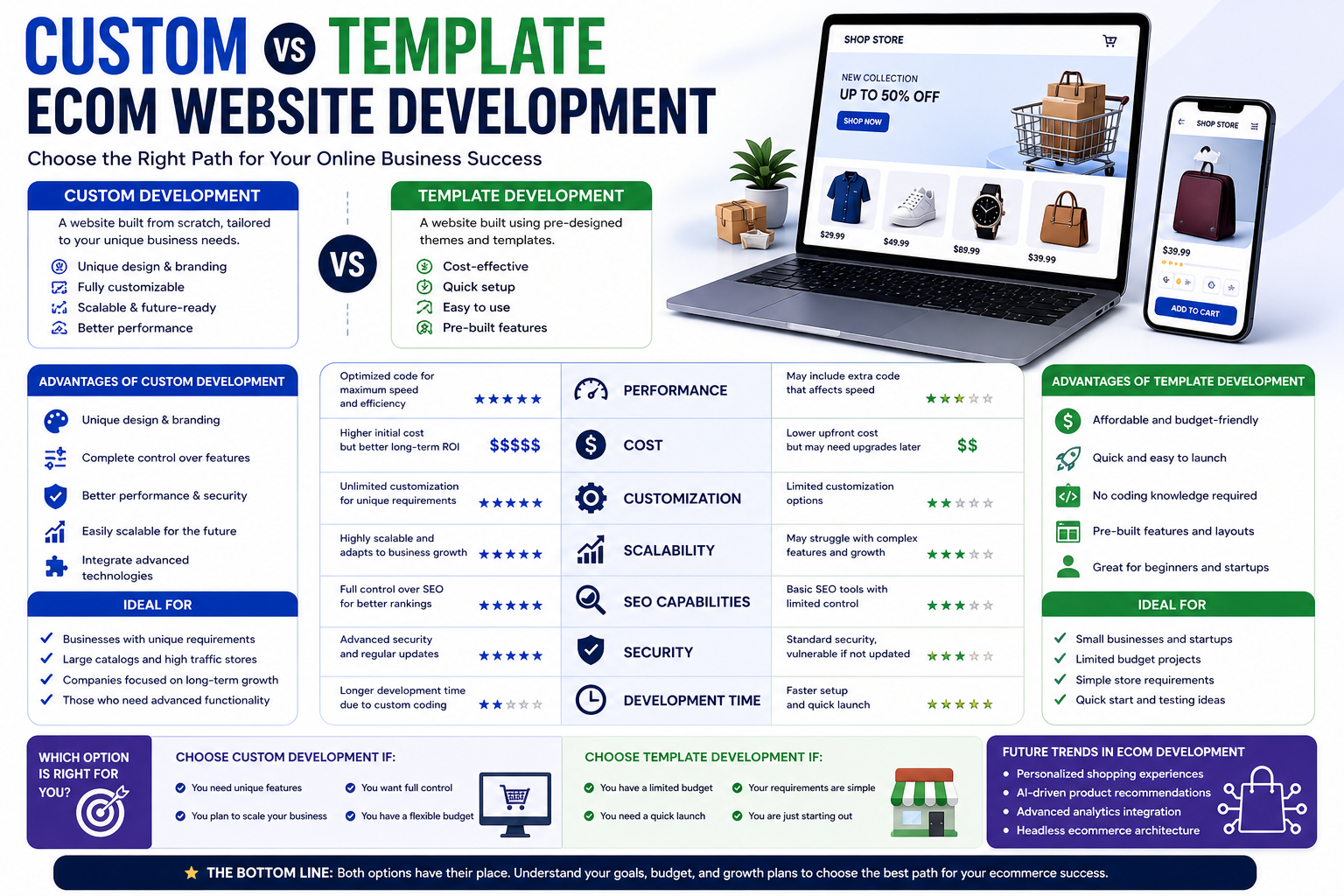
When starting an online store, one of the most important decisions you’ll face is choosing between a custom-built website and a template-based solution. This choice plays a major role in shaping the performance, scalability, and uniqueness of your online business.
In the world of ecom website development, both options have their advantages and limitations. While templates offer convenience and affordability, custom development provides flexibility and long-term growth potential.
In this blog, we’ll explore the differences between custom and template solutions to help you determine which approach is best for your business.
Understanding Custom Ecom Website Development
Custom ecom website development involves building a website from scratch, tailored specifically to your business needs and goals.
Key Advantages of Custom Development
- Unique Design: Your website stands out with a fully personalized look and feel.
- Scalability: Easily adapt and expand as your business grows.
- Advanced Functionality: Add custom features based on your requirements.
- Better Performance: Optimized code for faster loading and smoother operation.
Custom development is ideal for businesses that want complete control over their ecommerce platform.
Challenges of Custom Development
While custom solutions offer many benefits, they also come with certain challenges:
- Higher initial cost
- Longer development time
- Requires experienced developers
- Ongoing maintenance
Despite these challenges, custom development is often a worthwhile investment for long-term success.
Understanding Template-Based Ecom Website Development
Template-based development uses pre-designed themes and layouts to create an ecommerce website quickly.
Key Advantages of Templates
- Cost-Effective: Lower upfront investment
- Faster Setup: Launch your store in a shorter time
- Ease of Use: Minimal technical knowledge required
- Pre-Built Features: Many functionalities are already included
Templates are a popular choice for small businesses and startups with limited budgets.
Limitations of Templates
Although templates are convenient, they come with certain drawbacks:
- Limited customization options
- Generic design (less brand uniqueness)
- Potential performance issues
- Difficulty scaling for larger businesses
As your business grows, these limitations may become more noticeable.
Performance Comparison: Custom vs Template
Performance is a critical factor in ecom website development. A slow or inefficient website can negatively impact user experience and conversions.
- Custom Websites: Optimized for speed and efficiency
- Template Websites: May include unnecessary code that slows performance
Custom-built websites generally provide better performance, especially for high-traffic stores.
SEO Benefits of Each Approach
Search engine visibility is essential for ecommerce success. Both custom and template solutions can support SEO, but their effectiveness varies.
Custom Development for SEO
- Clean and optimized code
- Flexible URL structures
- Better site speed
- Full control over SEO elements
Template Development for SEO
- Built-in SEO tools
- Easy meta tag management
- Limited control over technical SEO
While templates offer basic SEO capabilities, custom development provides greater flexibility for advanced optimization.
Scalability and Future Growth
As your business expands, your website must be able to handle increased traffic, products, and features.
- Custom Websites: Highly scalable and adaptable
- Template Websites: May struggle with complex requirements
If long-term growth is a priority, custom ecom website development is often the better choice.
Security Considerations
Security is a top priority for any ecommerce business. Protecting customer data and transactions is essential.
- Custom Development: Tailored security measures and regular updates
- Templates: Standard security features, but may be vulnerable if not updated
Custom websites offer more control over security, making them a safer option for larger businesses.
Cost Comparison
Budget plays a significant role in decision-making.
- Custom Development: Higher upfront cost but better long-term ROI
- Template Development: Lower initial cost but may require upgrades later
Businesses should consider both short-term affordability and long-term value when making a decision.
Which Option Is Right for You?
Choosing between custom and template solutions depends on your business needs.
Choose Custom Development If:
- You need unique features
- You plan to scale your business
- You want full control over design and functionality
- You have a flexible budget
Choose Template Development If:
- You have a limited budget
- You need a quick launch
- Your requirements are simple
- You are just starting out
Understanding your goals will help you make the right choice.
Future Trends in Ecom Website Development
As ecommerce continues to evolve, businesses are increasingly leaning toward custom solutions to stay competitive.
Emerging trends include:
- Personalized shopping experiences
- AI-driven recommendations
- Advanced analytics integration
- Headless ecommerce architecture
Custom development makes it easier to adopt these innovations and stay ahead of the competition.