


New 01 May 2026
Custom vs Template-Based Ecommerce Development

Writen by Admin
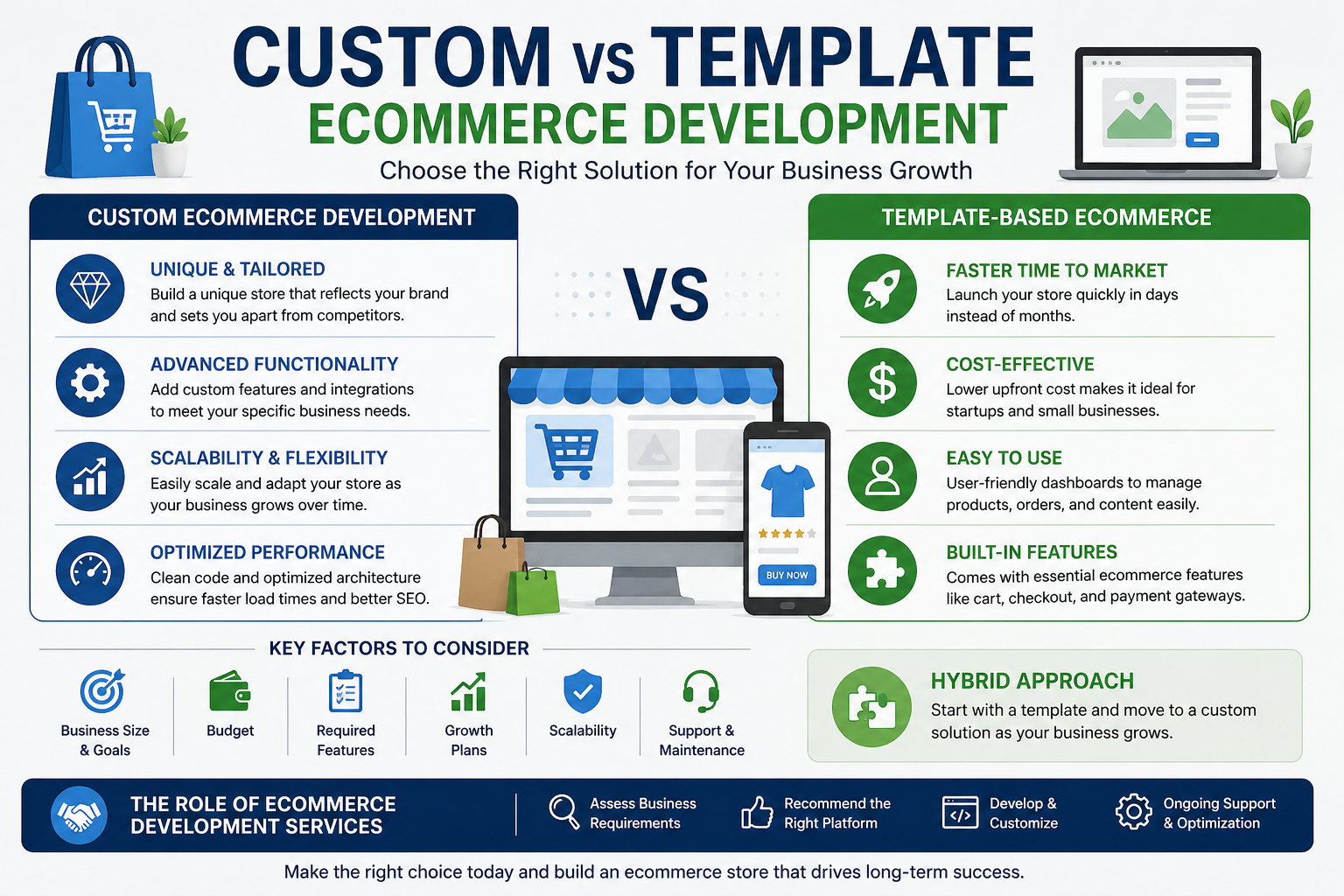
When launching an online store, one of the first major decisions you’ll face is whether to choose a custom-built website or a template-based solution. Both options have their advantages and limitations, and the right choice depends on your business goals, budget, and long-term vision.
By leveraging professional ecommerce development services, businesses can better understand these options and make informed decisions that align with their growth strategy.
Understanding Template-Based Ecommerce Development
Template-based ecommerce development uses pre-designed themes or layouts that can be customized to a certain extent. Platforms like Shopify and WooCommerce offer a wide range of templates that allow businesses to launch quickly.
These solutions are especially popular among startups and small businesses looking for a cost-effective way to enter the online market.
Benefits of Template-Based Solutions
1. Faster Time to Market
One of the biggest advantages of templates is speed. Businesses can launch their ecommerce store in a matter of days or weeks instead of months.
2. Cost-Effective Option
Template-based solutions are generally more affordable because they don’t require extensive design and development work.
3. Ease of Use
Most templates are designed with user-friendliness in mind, allowing non-technical users to manage products, orders, and content easily.
4. Built-In Features
Templates often come with essential ecommerce features such as product pages, shopping carts, and payment integrations.
Limitations of Template-Based Ecommerce
1. Limited Customization
While templates offer some flexibility, they may not fully align with your brand identity or unique requirements.
2. Generic Design
Since templates are used by multiple businesses, your website may look similar to others, making it harder to stand out.
3. Scalability Challenges
As your business grows, template-based platforms may struggle to handle complex features or high traffic volumes.
4. Performance Constraints
Pre-built templates often include unnecessary code, which can slow down your website.
Understanding Custom Ecommerce Development
Custom ecommerce development involves building a website from scratch, tailored specifically to your business needs. This approach provides complete control over design, functionality, and performance.
Professional ecommerce development services play a crucial role in creating a custom solution that aligns with your brand and long-term goals.
Benefits of Custom Ecommerce Development
1. Unique Brand Identity
A custom-built website allows you to create a distinctive design that reflects your brand and sets you apart from competitors.
2. Advanced Functionality
Custom development enables the integration of specialized features such as advanced search filters, AI-driven recommendations, and complex inventory systems.
3. Scalability and Flexibility
Custom platforms are designed to grow with your business, making it easier to add new features and handle increased traffic.
4. Optimized Performance
Developers can create clean, efficient code that ensures faster load times and better overall performance.
Challenges of Custom Development
1. Higher Initial Cost
Custom solutions require a larger upfront investment compared to templates.
2. Longer Development Time
Building a website from scratch takes more time, especially for complex projects.
3. Ongoing Maintenance
Custom platforms require regular updates and technical support to ensure optimal performance.
Key Factors to Consider When Choosing
1. Business Size and Goals
Small businesses with limited budgets may benefit from templates, while larger enterprises often require custom solutions.
2. Budget
Evaluate both short-term and long-term costs before making a decision.
3. Required Features
If your business needs unique functionality, custom development is the better choice.
4. Growth Plans
Consider whether your chosen solution can scale with your business over time.
Hybrid Approach: The Best of Both Worlds
Some businesses choose a hybrid approach—starting with a template and gradually moving to a custom solution as they grow. Ecommerce development services can help transition smoothly without disrupting operations.
The Role of Ecommerce Development Services
Professional ecommerce developers guide businesses through the decision-making process and ensure the chosen solution meets their needs.
Their expertise includes:
- Assessing business requirements
- Recommending suitable platforms
- Customizing templates or building from scratch
- Providing ongoing support and optimization
This ensures your ecommerce platform is efficient, secure, and future-ready.