


New 04 May 2026
Cost Breakdown of Hiring an Ecommerce Web Development Company

Writen by Admin
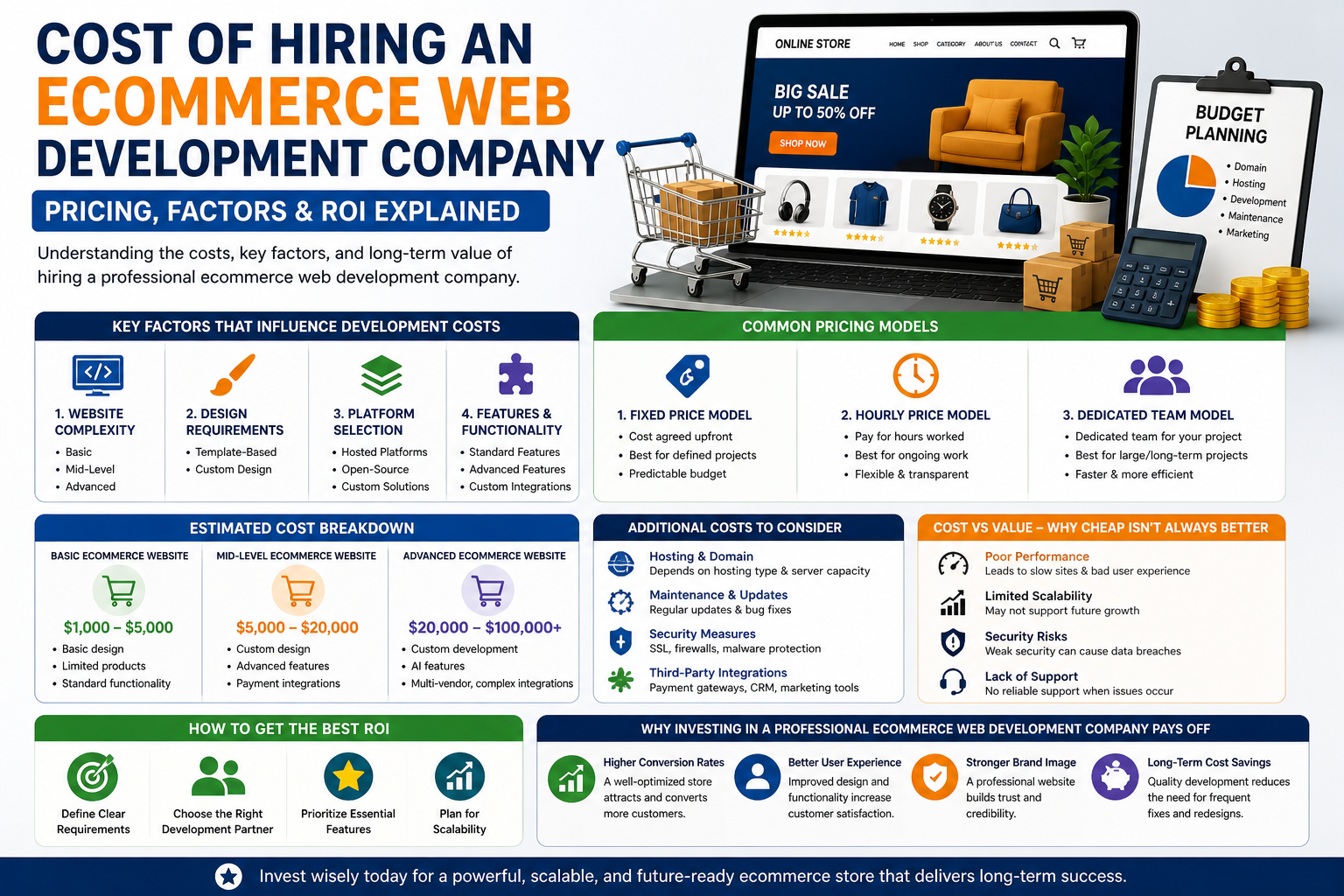
One of the most important considerations when building an online store is cost. Businesses often wonder how much it takes to hire a professional ecommerce web development company and whether the investment is worth it.
The truth is, ecommerce website development costs can vary widely depending on several factors, including complexity, features, design requirements, and ongoing maintenance. While some businesses look for the cheapest option, focusing solely on cost can lead to poor performance, security risks, and limited scalability.
In this blog, we’ll break down the cost of hiring an ecommerce web development company, explain the factors that influence pricing, and help you understand how to get the best return on your investment.
H2: Key Factors That Influence Development Costs
The cost of hiring an ecommerce web development company is not fixed. It depends on various elements that define the scope and complexity of your project.
H3: 1. Website Complexity
The more complex your website, the higher the development cost.
- Basic Ecommerce Website: Simple design with limited features
- Mid-Level Website: Custom design with standard ecommerce functionalities
- Advanced Website: Complex features like AI recommendations, multi-vendor systems, or custom integrations
An experienced ecommerce web development company will assess your requirements and provide a tailored quote based on complexity.
H3: 2. Design Requirements
Custom-designed websites cost more than template-based ones.
- Template-based designs are faster and more affordable
- Custom designs offer unique branding and better user experience
A professional ecommerce web development company often recommends custom design for long-term success.
H3: 3. Platform Selection
The platform you choose significantly impacts cost.
- Hosted platforms (like Shopify) may have subscription fees
- Open-source platforms (like WooCommerce or Magento) may require more development effort
- Custom-built solutions are the most expensive but offer maximum flexibility
Each option has its own pricing structure and benefits.
H2: Common Pricing Models Used by Ecommerce Web Development Companies
Different ecommerce web development companies use different pricing models depending on the project type.
H3: 1. Fixed Pricing Model
In this model, the cost is agreed upon before the project begins.
Best for:
- Clearly defined projects
- Small to medium-sized websites
Advantages:
- Predictable budget
- Clear expectations
H3: 2. Hourly Pricing Model
Here, you pay based on the number of hours worked.
Best for:
- Ongoing projects
- Frequent updates or changes
Advantages:
- Flexibility
- Pay only for actual work done
H3: 3. Dedicated Team Model
Some ecommerce web development companies offer a dedicated team for your project.
Best for:
- Large-scale projects
- Long-term development
Advantages:
- Full control over the team
- Faster development process
H2: Estimated Cost Breakdown
While costs vary, here’s a general estimate to help you understand pricing:
H3: 1. Basic Ecommerce Website
- Cost Range: $1,000 – $5,000
- Features: Basic design, limited products, standard functionality
H3: 2. Mid-Level Ecommerce Website
- Cost Range: $5,000 – $20,000
- Features: Custom design, advanced features, payment integrations
H3: 3. Advanced Ecommerce Website
- Cost Range: $20,000 – $100,000+
- Features: Custom development, AI features, multi-vendor support, complex integrations
A professional ecommerce web development company will provide a detailed proposal based on your needs.
H2: Additional Costs to Consider
Beyond development, there are several ongoing costs associated with running an ecommerce website.
H3: 1. Hosting and Domain
Reliable hosting ensures your website performs well under traffic. Costs vary depending on the hosting provider and server capacity.
H3: 2. Maintenance and Updates
Regular updates are necessary to keep your website secure and functional. Many ecommerce web development companies offer maintenance packages.
H3: 3. Security Measures
Investing in security features like SSL certificates, firewalls, and malware protection is essential for protecting customer data.
H3: 4. Third-Party Integrations
Integrations with tools like payment gateways, CRM systems, and marketing platforms may involve additional costs.
H2: Cost vs Value – Why Cheap Isn’t Always Better
It’s tempting to choose the lowest-priced option, but this can lead to long-term issues.
H3: 1. Poor Performance
Low-cost solutions often lack optimization, leading to slow loading speeds and poor user experience.
H3: 2. Limited Scalability
Cheap websites may not support future growth, requiring costly redevelopment.
H3: 3. Security Risks
Inadequate security measures can expose your business to cyber threats.
H3: 4. Lack of Support
Budget developers may not offer ongoing support, leaving you to handle issues on your own.
A reputable ecommerce web development company focuses on delivering value rather than just low prices.
H2: How to Get the Best ROI from Your Investment
To maximize your return on investment, it’s important to approach your project strategically.
H3: 1. Define Clear Requirements
Clearly outline your goals, features, and expectations before starting the project.
H3: 2. Choose the Right Development Partner
Select an ecommerce web development company with proven experience and a strong portfolio.
H3: 3. Prioritize Essential Features
Focus on features that directly impact user experience and conversions.
H3: 4. Plan for Scalability
Ensure your website can grow with your business to avoid future redevelopment costs.
H2: Why Investing in a Professional Ecommerce Web Development Company Pays Off
While hiring a professional ecommerce web development company may seem expensive initially, it offers significant long-term benefits.
H3: 1. Higher Conversion Rates
A well-optimized website attracts and converts more customers.
H3: 2. Better User Experience
Improved design and functionality enhance customer satisfaction.
H3: 3. Stronger Brand Image
A professional website builds trust and credibility.
H3: 4. Long-Term Cost Savings
Investing in quality development reduces the need for frequent fixes and redesigns.