


New 05 May 2026
Common Challenges in Ecom Website Development and How to Overcome Them

Writen by Admin
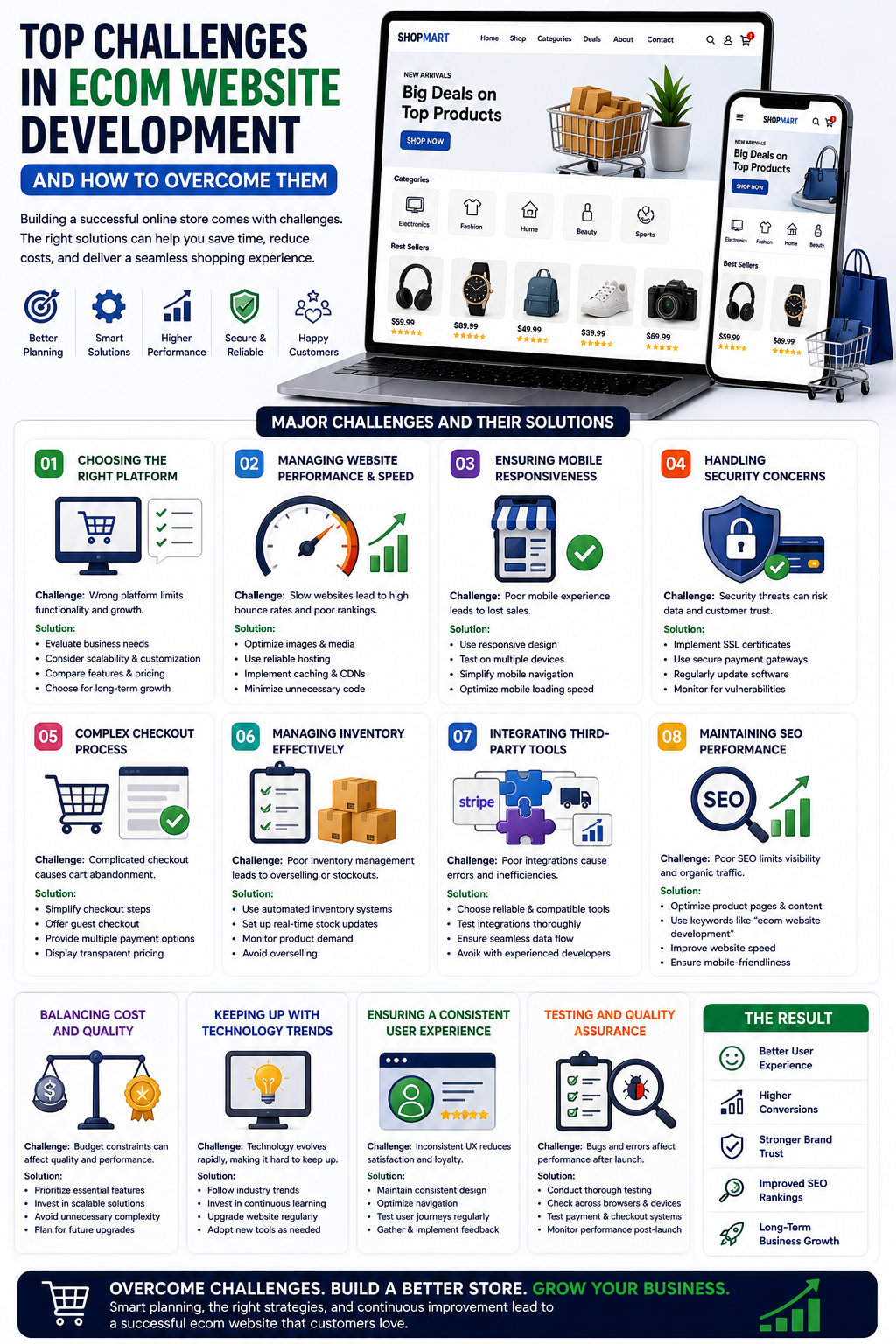
Building a successful online store is an exciting journey, but it comes with its own set of challenges. From technical complexities to user experience issues, businesses often face multiple obstacles during the process of ecom website development.
Understanding these challenges—and more importantly, knowing how to overcome them—can save time, reduce costs, and improve overall performance. Whether you’re a startup or an established brand, being prepared for these hurdles is essential for long-term success.
In this blog, we’ll explore the most common challenges in ecom website development and provide practical solutions to tackle them effectively.
Why Challenges Occur in Ecom Website Development
Ecommerce websites are more complex than standard websites because they involve multiple systems working together—product management, payments, user accounts, and more.
Challenges often arise due to:
- Lack of proper planning
- Limited technical expertise
- Budget constraints
- Rapidly changing technology
- High user expectations
Addressing these issues early can lead to a smoother development process.
Major Challenges and Their Solutions
1. Choosing the Right Platform
Selecting the wrong ecommerce platform can limit your website’s functionality and scalability.
Solution:
- Evaluate your business needs carefully
- Consider scalability and customization
- Compare features and pricing
- Choose a platform that supports long-term growth
Making the right choice at the beginning prevents costly migrations later.
2. Managing Website Performance and Speed
Slow-loading websites can frustrate users and lead to high bounce rates.
Solution:
- Optimize images and media files
- Use reliable hosting services
- Implement caching and CDNs
- Minimize unnecessary code
Improving performance ensures a better user experience and higher search rankings.
3. Ensuring Mobile Responsiveness
With a large number of users shopping on mobile devices, poor mobile optimization can result in lost sales.
Solution:
- Use responsive design
- Test website performance on multiple devices
- Simplify navigation for smaller screens
- Optimize mobile loading speed
A mobile-friendly website is essential for modern ecom website development.
4. Handling Security Concerns
Security is one of the biggest challenges in ecommerce. Customers need assurance that their data is safe.
Solution:
- Implement SSL certificates
- Use secure payment gateways
- Regularly update software
- Monitor for vulnerabilities
Strong security measures build trust and protect your business.
5. Complex Checkout Process
A lengthy or confusing checkout process is a major cause of cart abandonment.
Solution:
- Simplify checkout steps
- Offer guest checkout
- Provide multiple payment options
- Display transparent pricing
Reducing friction during checkout increases conversion rates.
6. Managing Inventory Effectively
Keeping track of inventory can be challenging, especially for growing businesses.
Solution:
- Use automated inventory management systems
- Set up real-time stock updates
- Monitor product demand
- Avoid overselling
Efficient inventory management ensures smooth operations and customer satisfaction.
7. Integrating Third-Party Tools
Ecommerce websites often rely on third-party integrations such as payment gateways, shipping providers, and analytics tools.
Solution:
- Choose reliable and compatible tools
- Test integrations thoroughly
- Ensure seamless data flow
- Work with experienced developers
Proper integration enhances functionality and efficiency.
8. Maintaining SEO Performance
Without proper SEO, your website may struggle to attract organic traffic.
Solution:
- Optimize product pages and content
- Use relevant keywords like “ecom website development”
- Improve website speed
- Ensure mobile-friendliness
Integrating SEO into development helps improve visibility and rankings.
Balancing Cost and Quality
Budget constraints are a common challenge for many businesses. However, cutting corners can lead to poor performance and higher costs in the long run.
Solution:
- Prioritize essential features
- Invest in scalable solutions
- Avoid unnecessary complexity
- Plan for future upgrades
A balanced approach ensures both quality and cost-effectiveness.
Keeping Up with Technology Trends
The ecommerce landscape is constantly evolving, making it difficult to stay updated with the latest technologies.
Solution:
- Follow industry trends
- Invest in continuous learning
- Upgrade your website regularly
- Adopt new tools and technologies when necessary
Staying updated helps maintain a competitive edge.
Ensuring a Consistent User Experience
Providing a seamless user experience across all devices and touchpoints can be challenging.
Solution:
- Maintain consistent design and branding
- Optimize navigation
- Test user journeys regularly
- Gather and implement user feedback
Consistency improves customer satisfaction and loyalty.
Testing and Quality Assurance
Skipping proper testing can lead to bugs and performance issues after launch.
Solution:
- Conduct thorough testing before launch
- Check functionality across browsers and devices
- Test payment and checkout systems
- Monitor performance post-launch
Quality assurance ensures a smooth and reliable user experience.